The useful starting point
Age is a signal to investigate, not a complete replacement specification. The useful decision joins equipment condition, supportability and the plant’s required future arrangement.
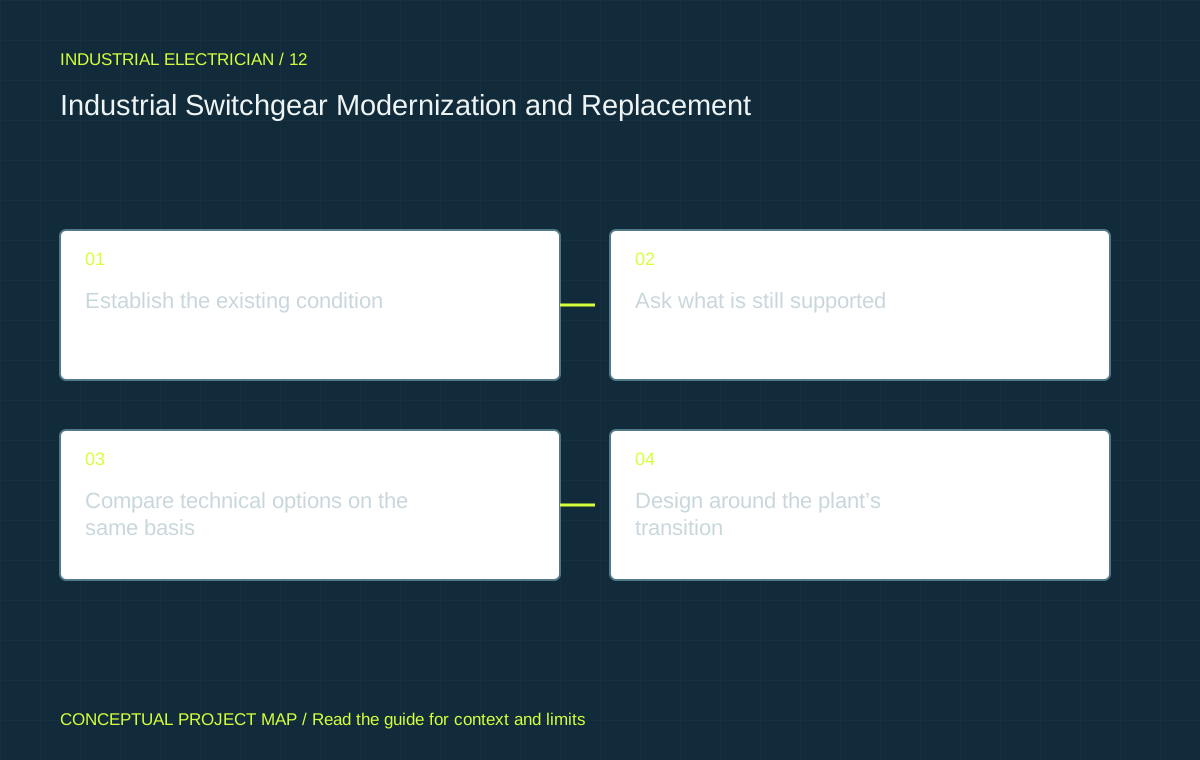
Establish the existing condition
Gather equipment identity, ratings, drawings, maintenance and test records, known defects and failure history. Document environmental exposure and mechanical condition. The qualified assessment should identify what can be verified and what remains uncertain.
Do not infer condition from exterior cleanliness or a recent label. The protection mechanism, insulation system, interfaces and enclosure can each govern a decision. Maintenance history is useful only when it records actual scope and findings.
Ask what is still supported
Confirm manufacturer support, specialist repair options, spare availability and the provenance of replacement components. An online listing for a used breaker is not a complete support strategy. Ask whether the part is suitable for the exact lineup and what acceptance evidence is available.
Consider the repair duration as well as the part price. A long lead time on a critical component can justify keeping an approved spare or preparing a replacement design before failure. The owner should compare the consequence of waiting with the capital and outage implications of modernization.
Compare technical options on the same basis
Maintenance preserves the existing arrangement where condition and support permit. A retrofit can modernize selected functions but needs engineered compatibility. Replacement can change the architecture and access, while adding civil, cable and outage work.
For each option, compare protection, fault duty, approval implications, physical interfaces, maintainability, documentation and expected support. A new device in an old cabinet is not automatically a reviewed system. Include changes to control supplies, interlocks and metering.
Design around the plant’s transition
Replacing gear often affects multiple loads and the utility interface. Survey cable entry, available length, equipment movement and working space. A physically smaller lineup can still be difficult to connect to old conductors.
Use a readiness review and reviewed fallback. The shutdown chapter explains why shipped hardware and accepted test plans must exist before isolation. Include specialist attendance and production restart support in the bid.
Close the protection and records loop
Review the system studies and labels affected by new devices or settings. Commission the actual protection chain and retain the accepted configuration. Update the drawings, asset register and spare strategy.
The commissioning guide sets out evidence gates. Modernization should leave the owner with a more supportable operating system, not only a new front panel.
Questions / Direct answers
Common questions
Must all old industrial switchgear be replaced?
No general age cutoff decides every case. Condition, support, duty, protection, approval and operating requirements need assessment.
Can a modern breaker be fitted into an old lineup?
Some engineered solutions may be available, but mechanical fit alone is insufficient. Confirm suitability, interfaces, ratings, approval and acceptance with the responsible specialists.
What can delay switchgear replacement?
Engineering, utility arrangements, custom equipment, existing cable interfaces, access, testing and production coordination can all govern the schedule.
References / Jurisdiction matters
Sources & further reading
Confirm the actual location, permit authority and equipment instructions before relying on a requirement. A source from another jurisdiction is identified for context.
- Electrical codes and standards currently in forceAlberta Municipal Affairs · 2026-10-07
- Arc flash: risks, assessment and preventive maintenanceCanadian Centre for Occupational Health and Safety · 2026-10-07
- Electrical safety: basic informationCanadian Centre for Occupational Health and Safety · 2026-10-07
Do not open equipment, handle refrigerants or work on energized systems. Permits, qualified trades and inspection requirements vary by location. This guide does not design an installation or certify existing equipment.