The useful starting point
A label is a communication tool. Its usefulness depends on the correct system model, protective behaviour, equipment condition and the task-specific electrical safety assessment.
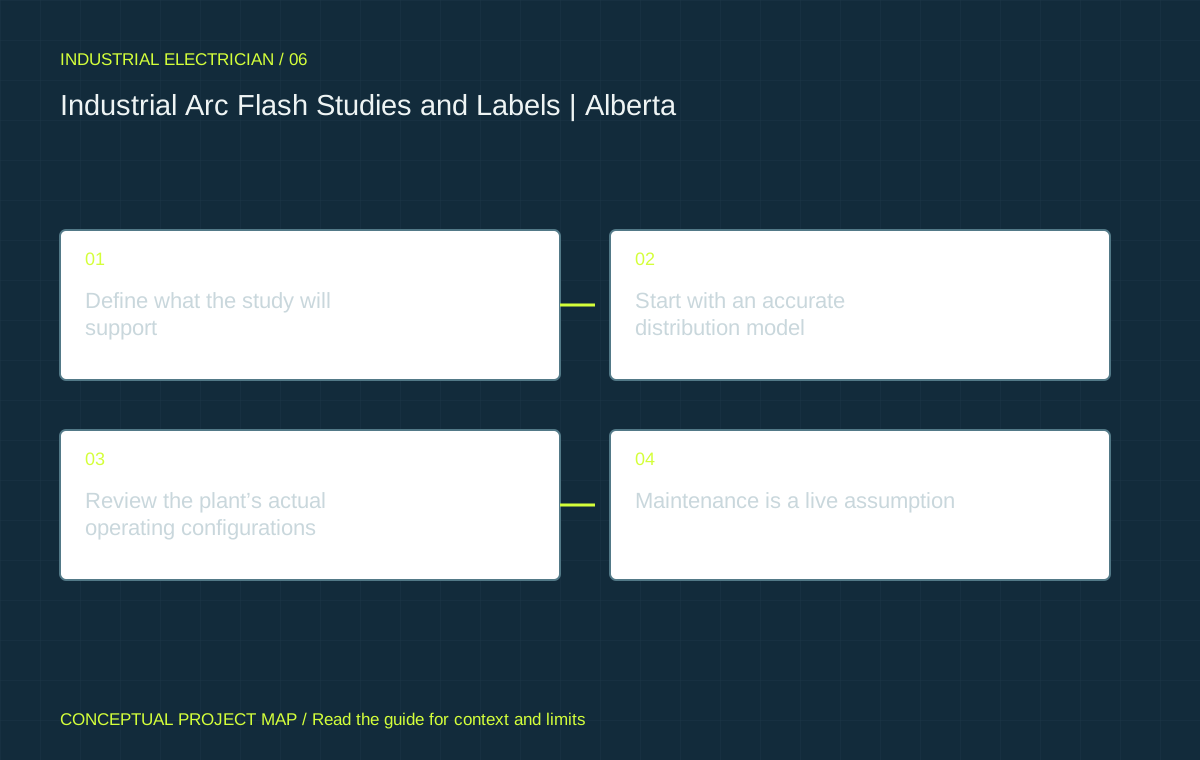
Define what the study will support
An arc flash study helps a facility understand and communicate a particular electrical hazard. It belongs within the employer’s electrical safety arrangements, alongside qualified people, task planning, equipment condition and hazardous-energy control. A report does not authorize energized work, and a sticker is not proof that the equipment is safe to operate in any condition.
CCOHS describes arc flash assessment as considering both likelihood and severity. The system design, protective operation and maintenance condition matter. A useful project scope identifies the study boundary and the separate work needed to validate the field data and equipment state.
Ask the study provider which methodology, standards and operating cases will be used, who is responsible for engineering review and how the results will be communicated to the facility. Do not reduce procurement to a count of labels. A cheap label package that omits critical data can create a misleading appearance of completeness.
Start with an accurate distribution model
The single-line drawing should identify the supply, transformers, conductors, protective devices and operating relationships within the study boundary. The field survey reconciles this model with actual equipment. Legacy drawings, incomplete cable records and undocumented settings need explicit resolution or identified limitations.
Utility data, transformer information, device ratings, settings and conductor characteristics can affect the model. The engineer must determine what is required and which assumptions are acceptable. An owner should provide access to available records and authorize the required site assessment without directing unqualified staff to open energized gear to collect data.
Record the source and revision of key inputs. A protective setting entered from an old file should not silently become the accepted field value. If a data item cannot be verified, the report should show the limitation and its effect on use of the results.
Review the plant’s actual operating configurations
A facility may operate with multiple utility paths, generators, ties or alternate transformer arrangements. Which configurations are credible affects the assessment. The engineer should identify the cases studied and the operating restrictions that make those cases meaningful.
Do not assume the largest available fault current is always the governing case for every result. Protective clearing behaviour can change with current and settings. The technical analysis belongs to the study specialist; the owner’s role is to make sure the model includes real operating arrangements rather than a convenient single snapshot.
Connect the study with a protection and coordination review as required by the project. A settings change intended to improve one result must be assessed against the system’s other protection requirements. It should not be introduced simply to obtain a more attractive label.
Maintenance is a live assumption
Models generally rely on protective equipment behaving as assumed. Condition and functional evidence therefore matter. The maintenance programme should address the installed equipment’s requirements and retain the relevant test records.
Damaged enclosures, contamination, corrosion and unusual operating indications need assessment independently of the numerical study. A recently issued label cannot make an impaired cabinet normal. Operators need a clear escalation path when the actual condition differs from the state used in the safety plan.
Plan study-related surveys and maintenance tasks through the facility’s approved safety procedures. This chapter does not provide live measurement methods, switching instructions, approach boundaries or PPE categories.
Make labels match the current accepted system
Labels should identify the equipment and convey the required information in the form defined by the responsible programme and study. Keep a label register linked with equipment identifiers and the report. If equipment is replaced, settings change or the supply arrangement changes, determine whether the study and labels need review before relying on old results.
Store the supporting model, report, inputs, revision history and change decisions in a controlled location. An owner who receives only a locked PDF and a stack of labels may have difficulty maintaining the study through future projects. Define usable source and handover deliverables in the quotation.
Integrate the accepted results into training, maintenance and project review. The commissioning handover should record changes that could affect the study, so the next project does not start from an obsolete baseline.
Questions / Direct answers
Common questions
Does an arc flash label allow energized work?
No. The employer’s task assessment, authorization, qualified personnel and applicable controls determine the work. The label communicates study information; it does not replace those decisions.
When should an industrial arc flash study be reviewed?
Review it when relevant equipment, protection, supply or operating arrangements change, and under the responsible programme’s review requirements. Do not assume an old result remains valid after a plant modification.
Can this website choose arc flash PPE?
No. PPE and boundaries require the actual electrical system, task and qualified assessment. No generic plant voltage or online calculator can establish them here.
What should an owner receive besides labels?
The agreed report, study boundary, identified inputs and assumptions, operating cases, equipment register, revision history and usable update material, with any limitations stated clearly.
References / Jurisdiction matters
Sources & further reading
Confirm the actual location, permit authority and equipment instructions before relying on a requirement. A source from another jurisdiction is identified for context.
- Arc flash: risks, assessment and preventive maintenanceCanadian Centre for Occupational Health and Safety · 2026-10-07
- OHS Act, regulation and codeGovernment of Alberta · 2026-10-07
- Electrical safety: basic informationCanadian Centre for Occupational Health and Safety · 2026-10-07
Do not open equipment, handle refrigerants or work on energized systems. Permits, qualified trades and inspection requirements vary by location. This guide does not design an installation or certify existing equipment.