The useful starting point
Adding a machine is a distribution question before it becomes a cable question. Follow the complete path and identify the constraint that actually governs the project.
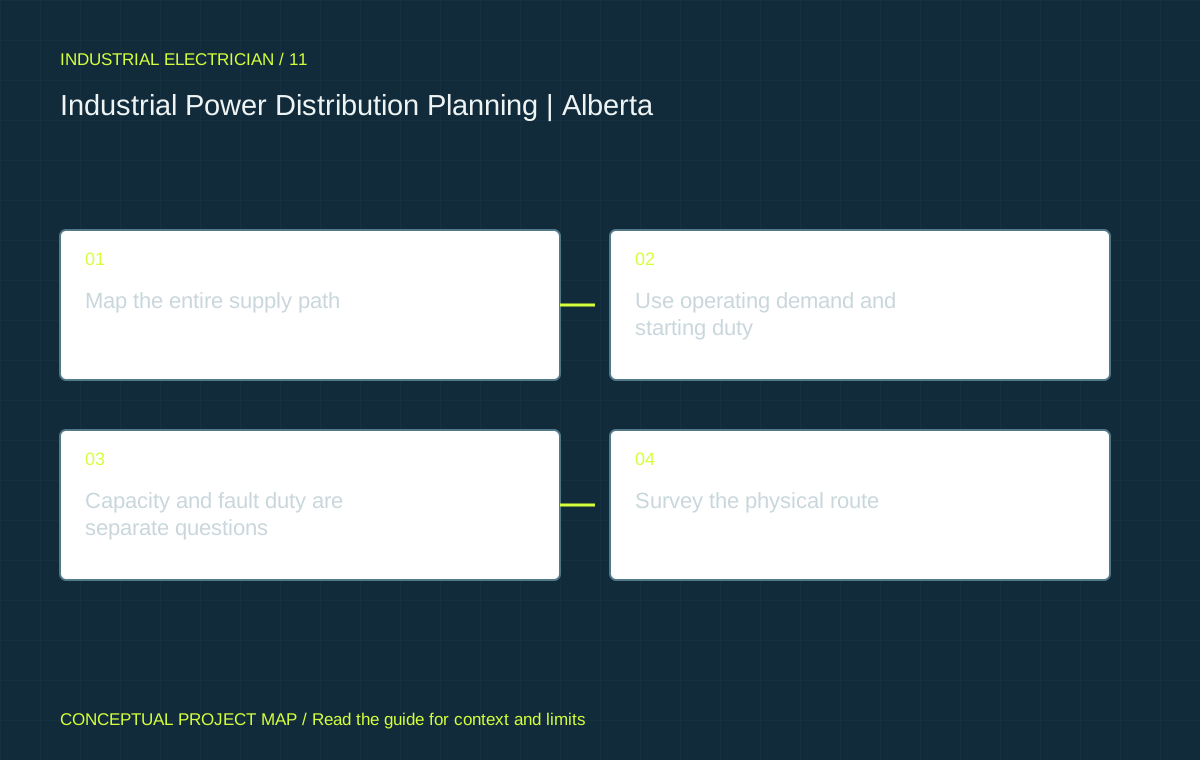
Map the entire supply path
Identify the utility connection, customer-owned equipment, transformers, switchgear, distribution boards, feeders and final equipment. Keep the ownership boundary explicit. A facility can be responsible for equipment that looks like utility infrastructure, particularly with primary-metered arrangements.
Use a current single-line drawing and reconcile it with the actual plant through a qualified survey. Record spare ways, physical space and existing modifications. A spare breaker position is not evidence of spare electrical capacity, and an empty conduit is not proof that a new circuit can be installed without further review.
Use operating demand and starting duty
Collect the new equipment’s complete electrical requirements and the existing plant’s operating pattern. Production shifts, seasonal loads, process overlap and large starts can change the relevant case. Avoid treating every motor as simultaneously at full mechanical output or assuming an operating average is the worst condition.
The designer determines the applicable load calculation, ratings and protection requirements under the current code. The three-phase guide helps explain the input quantities; it does not replace that design.
Capacity and fault duty are separate questions
An expansion can change fault contribution, protective relationships and operating configurations. Distribution design must address these alongside usable capacity. Equipment that carries the load may still require review for its short-circuit and protection arrangement.
Obtain the required utility and equipment information, then identify whether the protection and arc flash study need updating. Keep approved settings and installed data aligned through commissioning.
Survey the physical route
Feeder length, tray condition, structural support, penetrations, access, environmental exposure and future maintenance all affect the scope. A routing shortcut can create difficult heat, segregation or serviceability questions.
Record who owns structural, firestopping, civil and equipment-room changes. The electrical quotation should not silently assume another contractor will provide them. For buried or interbuilding work, investigate both public and customer-owned services through the appropriate locate process before excavation.
Plan the transition to the new arrangement
Decide how the existing plant operates during the work and how the final system will be accepted. Temporary supply, phased transfer, utility coordination and protection changes require an engineered plan. The shutdown guide turns those decisions into readiness gates.
Request updated drawings, equipment identification and test records at handover. A distribution project is incomplete as an operating asset if the maintenance team cannot identify what now supplies each critical load.
Questions / Direct answers
Common questions
Does a spare breaker space mean capacity is available?
No. Physical space, calculated loading, conductor and equipment ratings, fault duty and utility supply are separate questions.
Can distribution work happen while production continues?
Some projects can be phased, but the actual arrangement, safety controls and temporary supplies require a site-specific plan. Do not assume uninterrupted operation from a general service description.
What starts a useful distribution enquiry?
The site, operating change, equipment data, existing drawings, known capacity concerns, access and outage limits. Identify missing information so the survey scope can be defined.
References / Jurisdiction matters
Sources & further reading
Confirm the actual location, permit authority and equipment instructions before relying on a requirement. A source from another jurisdiction is identified for context.
- Electrical codes and standards currently in forceAlberta Municipal Affairs · 2026-10-07
- Meter installation and energization processENMAX Power · 2026-10-07
- Service connections in EdmontonEPCOR · 2026-10-07
Do not open equipment, handle refrigerants or work on energized systems. Permits, qualified trades and inspection requirements vary by location. This guide does not design an installation or certify existing equipment.