The useful starting point
A clean enclosure can still contain a protection problem. A maintenance plan must explain which failures matter, how they will be found and what evidence makes the equipment fit to return to service.
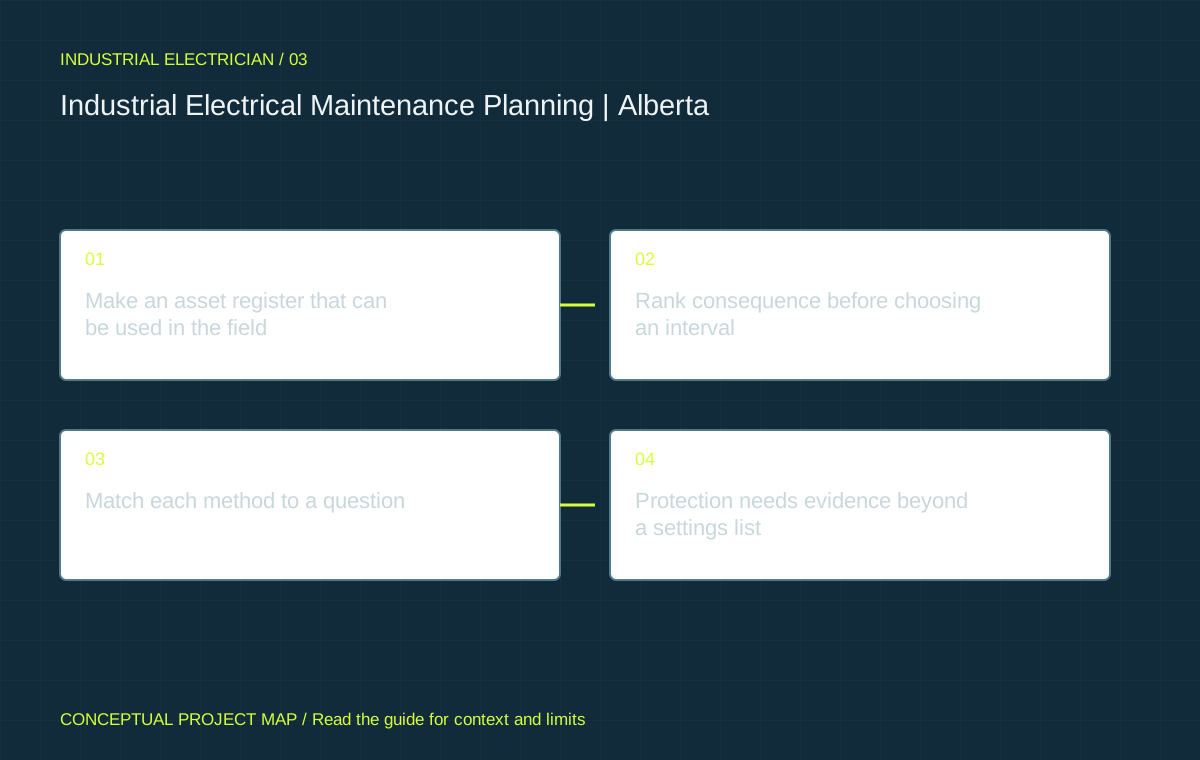
Make an asset register that can be used in the field
Start with identifiable equipment: service and distribution gear, transformers, protective devices, MCCs, starters, drives, control panels and critical power supplies. Each entry should have a physical identifier, location, upstream and downstream relationship, manufacturer information and a link to the current drawing. A list of cabinet names without circuit relationships cannot show which production loads are affected by a failure.
Record the environmental conditions that change maintenance needs. Dust, process vapour, condensation, vibration, high temperature, washdown and outdoor exposure can matter more than calendar age. Distinguish clean indoor gear from similar equipment in a difficult location. Where condition is uncertain, record “not assessed” and assign an assessment rather than filling the register with reassuring default values.
Keep manufacturer manuals and previous records with the asset. A maintenance team needs the relevant instruction for the installed product, not a generic checklist downloaded for a different breaker. Include available test history, defects, modifications, settings, spare availability and the most recent operating observations. This register becomes the common reference for maintenance, shutdowns and troubleshooting.
Rank consequence before choosing an interval
Ask what happens if each asset fails or fails to operate when required. A small control power supply may stop an entire line; a large motor may have an installed standby. Consequence includes personnel risk, environmental impact, product loss, restart difficulty, repair duration and the availability of a safe alternative. Name the actual operating consequence rather than assigning every item “critical.”
Combine consequence with condition and evidence quality. A well-documented asset with predictable access differs from unidentified legacy gear whose protective functions have not been tested. The resulting priority should determine where to investigate first and what outage access is needed. It does not replace manufacturer instructions or statutory responsibilities with a home-made numerical score.
The programme should document how intervals are chosen and revised. Do not publish one annual frequency for all industrial electrical equipment. Inspection and testing depend on equipment, environment, duty, history, manufacturer guidance and the qualified person’s assessment. A newly observed defect, flooding event or protection change can justify action before the next scheduled visit.
Match each method to a question
Visual assessment can reveal contamination, corrosion, mechanical damage and missing identification. Thermography can help identify abnormal heating under the observed operating condition. Electrical and functional tests address other questions about insulation, protection and operation. None of these methods is a universal proof of safety.
A thermographic report should identify the asset, operating condition, image, observed anomaly and proposed action. A cool lightly loaded connection is not the same evidence as a cool connection during representative duty. Ask whether the survey had meaningful operating conditions and whether inaccessible equipment was excluded. Do not describe a site as cleared merely because no hot spots appeared on a short visit.
CCOHS lists maintenance and current drawings among measures relevant to electrical risk. The exact inspection and test methods still belong to qualified personnel. Opening enclosures, operating gear or testing electrical components introduces task-specific hazards, which must be assessed and controlled before the work.
Protection needs evidence beyond a settings list
Protective devices are expected to act during a fault that may rarely occur in normal operation. A settings file proves what was intended or recorded; it does not prove that the installed device, trip circuit and mechanism will act correctly. The maintenance scope should identify what testing is applicable and how the actual settings are reconciled with the approved study.
Changes in utility fault contribution, transformer arrangement, feeder protection or production configuration can affect the design assumptions. Update the review when the system changes. An arc flash study and a coordination review are connected to the maintenance condition of the equipment, but neither should be treated as a substitute for that maintenance.
Record discrepancies precisely: device identity, observed setting, approved reference, required action and closure evidence. “Breaker checked” is too vague to support later investigation. Where testing reveals a failure, identify whether the asset can remain in service and who has authority to make that decision. Do not conceal an operational restriction in the appendix of a maintenance report.
Turn findings into executable corrective work
An inspection programme only reduces risk if findings become reviewed actions. Every defect needs a severity assessment, responsible owner, target date and evidence of closure. Tie the recommended work to materials, drawings, specialist availability and production access. An unavailable obsolete part can turn a minor recommendation into a long outage if procurement starts only after the next failure.
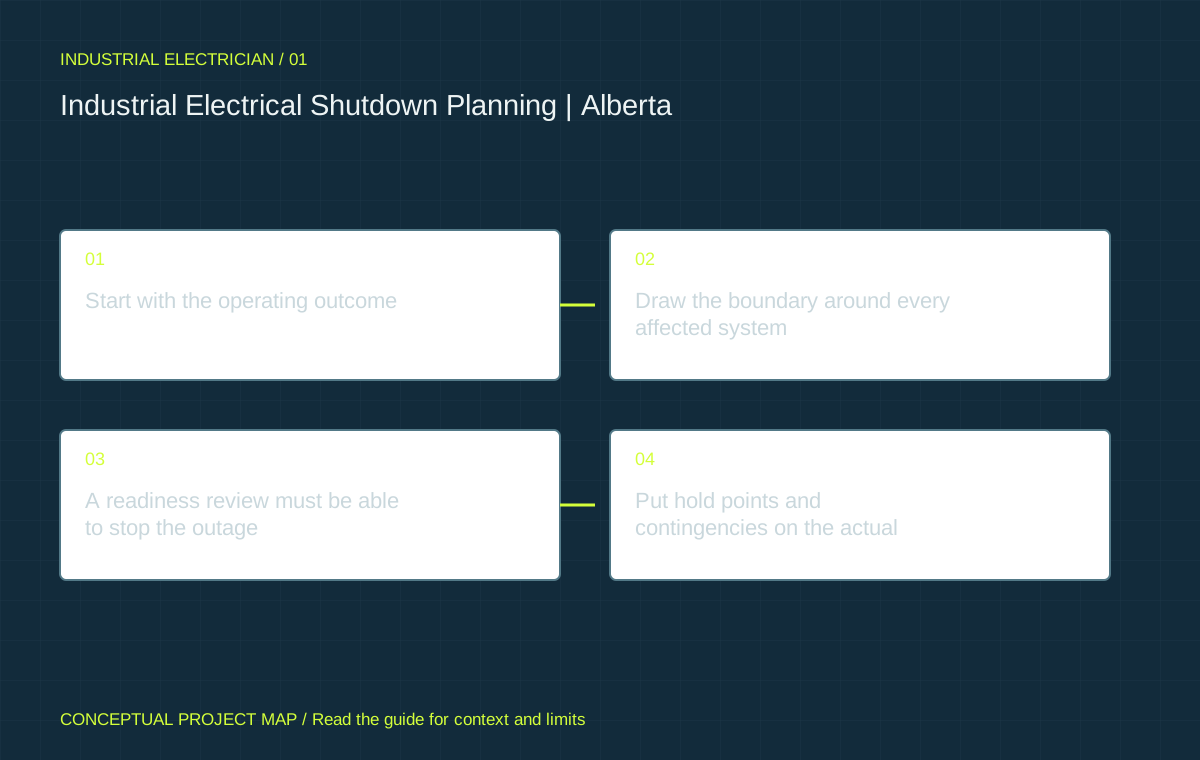
Group corrective tasks where the same isolation boundary or access is required, while protecting the critical path. The shutdown guide explains how to distinguish readiness, execution and restart. Make it clear which inspections can occur during operation under an assessed plan and which tasks require a planned de-energized condition.
Where a defect cannot be corrected immediately, document the reviewed interim controls and operating restrictions. A report marked “monitor” should state what is monitored, by whom, at what interval and what condition triggers escalation. Monitoring is not a repair, and a temporary arrangement needs a defined endpoint.
Keep trends that explain change
Trend comparable observations rather than collecting disconnected PDFs. The asset identifier, test method, operating state and units must be stable enough to make comparisons meaningful. If the method or equipment changes, record the difference. A reading taken under another load or test condition may not support a conclusion that condition improved or deteriorated.
Track failures and nuisance trips with the production event. Was a large motor starting? Had washdown just finished? Was the UPS on battery? Were settings changed? Event context helps connect electrical evidence with process and environment. The power quality guide discusses coordinating electrical trends with alarm and process records.
At handover, update the register, drawings, settings and spare parts information. The next maintenance visit should start from the latest accepted state. A facility that repeatedly pays to rediscover its system has a records problem as well as a maintenance problem.
Specify a maintenance deliverable the owner can use
Ask a quotation to identify assets covered, exclusions, access assumptions, applicable methods, shutdown requirements and report content. Define the response needed for urgent findings and whether corrective pricing is included. A low survey price may exclude the difficult gear that governs the plant’s largest outage risk.
Request a sample report with customer details removed. Look for traceable equipment identities, readable findings, method and condition, prioritised actions and useful photographs. Avoid relying on a badge or the number of images as a proxy for quality. The person planning the work needs evidence they can act on, not just a document that says the visit occurred.
Use a focused enquiry to describe the plant, existing programme, critical loads, recent failures and available shutdown windows. A maintenance visit is not promised through this reference portal; a person reviews the enquiry and can discuss the next step with your agreement.
Questions / Direct answers
Common questions
How often should industrial switchgear be maintained?
Use the installed equipment’s instructions, duty, environment, condition and competent assessment. A single interval for all gear is unreliable. Record how the interval was chosen and review it after defects or system changes.
Does thermography prove that electrical equipment is safe?
No. It observes thermal behaviour under particular conditions and access limitations. It should be one part of an assessment that includes the relevant equipment, protection and operational evidence.
Can an arc flash study replace preventive maintenance?
No. A study models the electrical system and protection assumptions. Equipment condition and actual protective operation still need appropriate maintenance and verification.
What belongs in a maintenance report?
Identified assets, method, operating or test conditions, findings, limitations, prioritised actions and closure requirements. Useful reports connect the observation to a decision and preserve enough detail for a future comparison.
What if replacement parts are obsolete?
Record availability and approved alternatives before a failure. Compare supported repair, retrofit and replacement options using condition, interfaces, protection, outage needs and documentation; do not assume a visually similar part is interchangeable.
References / Jurisdiction matters
Sources & further reading
Confirm the actual location, permit authority and equipment instructions before relying on a requirement. A source from another jurisdiction is identified for context.
- Arc flash: risks, assessment and preventive maintenanceCanadian Centre for Occupational Health and Safety · 2026-10-07
- Electrical safety: basic informationCanadian Centre for Occupational Health and Safety · 2026-10-07
- OHS Act, regulation and codeGovernment of Alberta · 2026-10-07
- Electrical codes and standards currently in forceAlberta Municipal Affairs · 2026-10-07
Do not open equipment, handle refrigerants or work on energized systems. Permits, qualified trades and inspection requirements vary by location. This guide does not design an installation or certify existing equipment.