The useful starting point
Commissioning connects the installed components with the operating purpose. The plant owner needs a traceable record of what was tested, what passed and what still limits operation.
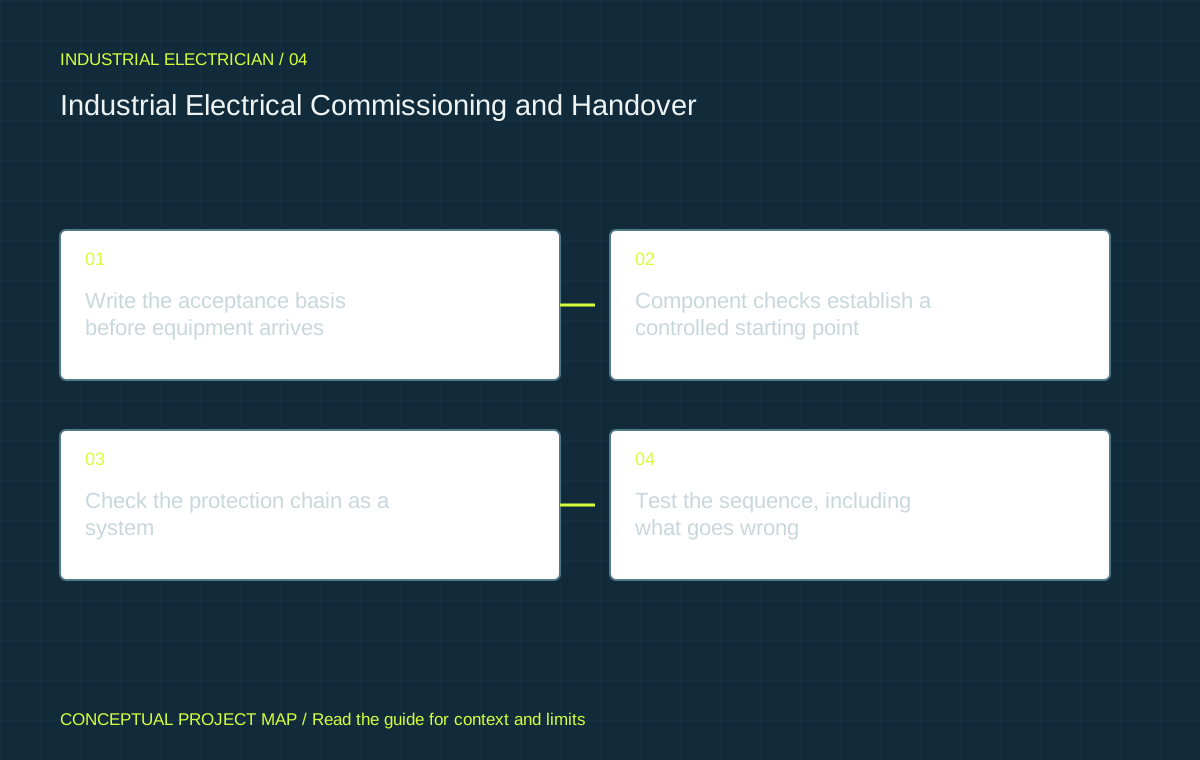
Write the acceptance basis before equipment arrives
A commissioning plan starts with the intended operating outcome and the approved design. Identify which equipment, functions and interfaces must be verified. State the applicable acceptance basis for each item: manufacturer instructions, approved engineering documents, contractual performance requirement or a reviewed process criterion. Avoid a generic form that assigns a pass box to every imaginable test.
Define responsibilities. The contractor, test specialist, controls integrator, equipment manufacturer, engineer, inspection authority and operations representative may each own different evidence. A witness can observe a test without becoming responsible for its design. State who reviews results, who closes deficiencies and who authorizes the next stage.
Prepare the records while the design information is accessible. Missing relay logic, motor data, cause-and-effect schedules or current software can delay acceptance after installation is otherwise complete. Procurement specifications should require the information needed for commissioning and future maintenance, rather than asking for an “O&M manual” with no defined contents.
Component checks establish a controlled starting point
Before integrated operation, the qualified team establishes that installation and equipment are ready for the applicable next step. The scope can include identity, condition, ratings, mechanical installation, connections, identification, protection and test results. Which tests are appropriate depends on the installed equipment and the relevant instructions; inappropriate test methods can damage electronics or invalidate useful evidence.
Record what was actually tested and any exclusions. An insulation test at one boundary is not proof of every connected device. A breaker’s mechanical operation does not by itself verify the complete protective trip path. The report needs an unambiguous equipment identifier, method, result, acceptance basis and responsible person.
Resolve installed-versus-designed differences. A substitution that appeared equivalent during purchasing may alter control interfaces, settings, protection or maintenance requirements. Review that change before accepting the installation. Do not quietly update the drawing to match the installed part without checking whether the intended performance remains satisfied.
Check the protection chain as a system
Protection commissioning should connect the approved settings and logic with the actual installed devices and operating paths. The protection specialist determines the applicable test methods and safe conditions. Where relays, trip circuits, interlocks or remote signals form one function, separate bench passes may not demonstrate that the complete chain works.
Document the installed configuration and its reference revision. Settings downloaded from a file need readback and reconciliation through the approved process. Record changes made during commissioning and obtain the required engineering approval. An undocumented adjustment to avoid a nuisance trip can create a protection problem elsewhere in the system.
Review coordination and arc flash information where protection changes affect their assumptions. The public label, drawings and maintenance record should reflect the accepted configuration. “Study to follow” needs an explicit reviewed restriction or closure plan; it should not disappear after production resumes.
Test the sequence, including what goes wrong
Controls commissioning must cover normal modes, transition states and credible abnormal conditions. A motor run command is only one element. Confirm the planned behaviour when a required permissive is absent, a process signal is lost, communications fail or power returns. The test plan must determine how these conditions can be assessed safely without exposing people or equipment to unacceptable risk.
A cause-and-effect schedule is useful because it describes the relationship between inputs, operating conditions and expected actions. Give the operator a readable description instead of requiring them to infer intent from PLC code. For complex changes, a controlled factory test or simulation can reveal interface errors before the plant outage, followed by the agreed site validation.
Keep ordinary process control and safety-related functions clearly identified. Safety changes need the applicable specialist design and validation; they cannot be accepted merely because an HMI button stopped the machine once. Record software revisions, approved backups, parameter files, access responsibilities and the restore method. Do not include passwords in public or uncontrolled handover documents.
Use representative operating cases
Integrated tests should represent the plant’s real duty within the reviewed test plan. An empty conveyor, unloaded motor or cold process may not demonstrate production performance. Agree on the operating cases with the owner: start, stable operation, change in demand, planned stop and the relevant recovery sequence.
Define measurable performance where it matters. A pump may need stable pressure over a range; a process heater may need a controlled recovery; a material line may need correct sequencing between machines. A contractual performance test requires a reliable baseline, stated measurement method and agreed limits. Avoid claiming improved output or reduced energy without comparable evidence.
Observe the electrical system as well as the process. Record agreed current, voltage, thermal, alarm or other operating evidence where relevant. The motor and drive guide explains why an apparently successful run can still leave cooling, cable or duty questions unresolved. Measurement and interpretation belong to the competent team.
Make the punch list carry authority
Separate defects that prevent the next stage from work that can be completed later under an approved plan. Each item needs a clear description, affected equipment, owner, required evidence and due date. State who decides whether an item blocks energization, integrated operation or final handover. A “minor” label should describe consequence, not pressure to hit a completion milestone.
Temporary arrangements deserve their own register. Include approved bypasses, temporary feeds, incomplete identification and outstanding documentation. State the operating restriction and the closure condition. An undocumented temporary workaround can outlive the project and become the next maintenance team’s unexplained normal state.
Keep the test record and punch list linked. If a result is conditional, the associated unresolved item should be visible. A final certificate that says everything passed while its supporting report records exclusions is not an adequate handover. Review evidence for consistency before closing the contract.
Leave an operating system, not a document pile
The owner should receive the current drawings, equipment list, approved settings, relevant manuals, software and parameter backups, test records, unresolved-item register and maintenance requirements. Use equipment identifiers and a clear index so a future fault can be investigated without searching dozens of unnamed files.
Train operators on the actual accepted configuration: normal modes, limitations, alarms, permitted actions and escalation. Maintenance staff need isolation references, spare parts, support contacts and the approved restore process. Training attendance alone does not establish competence; the facility must determine the appropriate task qualification and authorization.
Close out after the agreed production support period. Reconcile redlines, record observed problems and confirm temporary arrangements were removed or formally accepted. Commissioning is strongest when its records become the baseline for maintenance and the next project. Describe commissioning and handover deliverables in the initial enquiry, while scope and price can still be shaped.
Questions / Direct answers
Common questions
Is commissioning the same as an electrical inspection?
No. An inspection addresses the applicable authority’s requirements. Commissioning verifies the agreed installation, functions and operating intent. Projects may require both, with separate records and release decisions.
Can factory testing replace site commissioning?
Factory testing can verify important components and logic before delivery. Site installation, interfaces, utility supply and the actual process still require the applicable site checks and acceptance.
What is an integrated test?
It evaluates an agreed function across interacting components, such as the path from a process permissive through control logic to the intended equipment response. The safe method and acceptance criteria must be defined for the actual system.
What should be in an industrial electrical handover package?
Current drawings, asset identities, accepted settings and software, relevant manuals, traceable test records, unresolved items, operating limitations and maintenance requirements. Keep credentials controlled separately.
Who signs the commissioning results?
Identify the performer, reviewer, witness where required and release authority in the project plan. Their roles depend on the equipment, scope, contract and applicable authorities; one signature cannot be assumed to cover them all.
References / Jurisdiction matters
Sources & further reading
Confirm the actual location, permit authority and equipment instructions before relying on a requirement. A source from another jurisdiction is identified for context.
- Electrical codes and standards currently in forceAlberta Municipal Affairs · 2026-10-07
- OHS Act, regulation and codeGovernment of Alberta · 2026-10-07
- Electrical safety: basic informationCanadian Centre for Occupational Health and Safety · 2026-10-07
- Arc flash: risks, assessment and preventive maintenanceCanadian Centre for Occupational Health and Safety · 2026-10-07
- Variable frequency drives: application and process assessmentNatural Resources Canada · 2026-10-07
Do not open equipment, handle refrigerants or work on energized systems. Permits, qualified trades and inspection requirements vary by location. This guide does not design an installation or certify existing equipment.