The useful starting point
The useful measure of a shutdown is controlled return to production. A completed cable pull means little if a protective relay setting, process permissive or utility release prevents the plant from restarting.
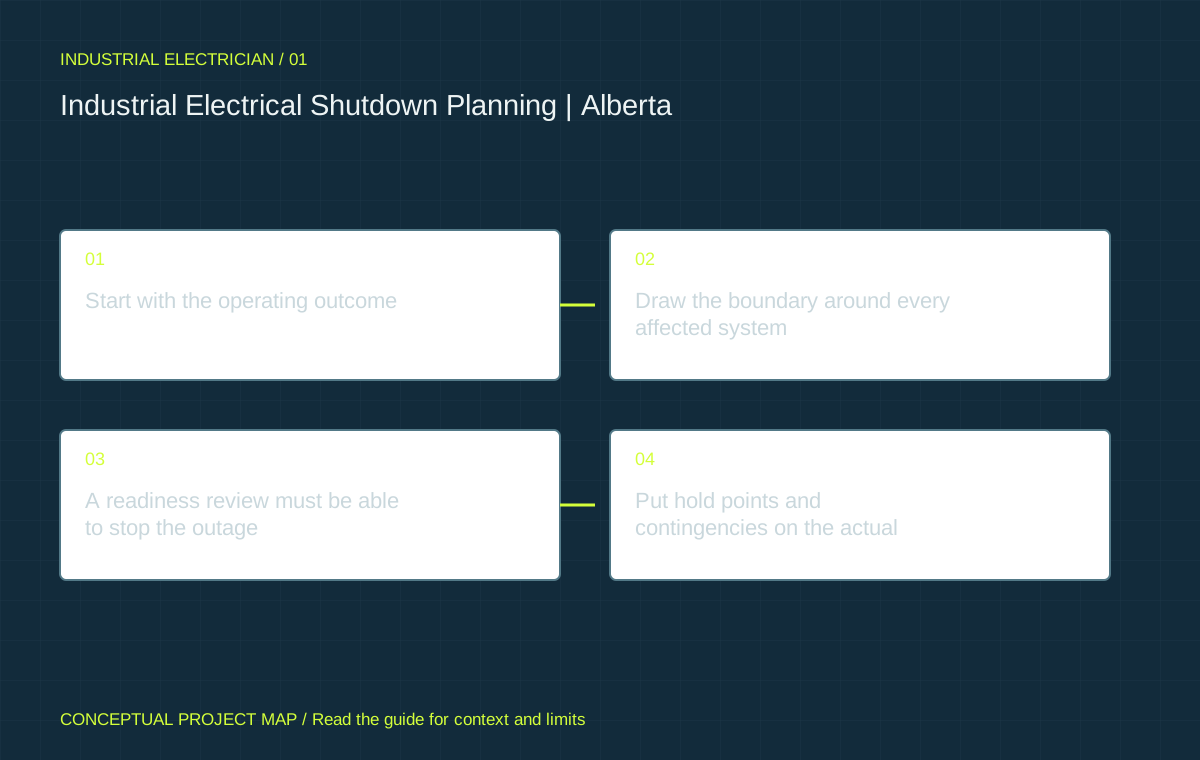
Start with the operating outcome
Write the production outcome before the construction description. “Replace the main breaker” describes a task. “Return both process lines to normal operation with accepted protection settings, tested trip circuits and an updated operating drawing” describes a result. The difference determines which trades, vendor specialists, operator representatives and test records belong in the scope.
Separate the equipment outage from the production outage. A cold room may tolerate a short power interruption but need a longer temperature recovery; a process line may need cleaning, raw material checks and a controlled first batch. Include those recovery activities in the schedule. Ask operations to identify the latest time at which restart can begin, not just the time at which electrical work must end.
Define a minimum viable restart. Decide which loads must operate together, which can return later and which cannot be deferred safely. This gives the project lead a real fallback decision when a replacement part fails inspection or a test reveals an unexpected defect. The fallback must be technically reviewed; “put it back how it was” is not a credible plan after equipment has been removed.
Draw the boundary around every affected system
Use the current single-line drawing to define the electrical boundary, then ask process and controls staff to identify dependencies outside it. A feeder can supply a local machine while the machine relies on a remote compressed-air system, network switch, emergency-stop loop or cooling pump. A generator, UPS, photovoltaic system or control transformer may introduce another source. These dependencies change the isolation and restart plans.
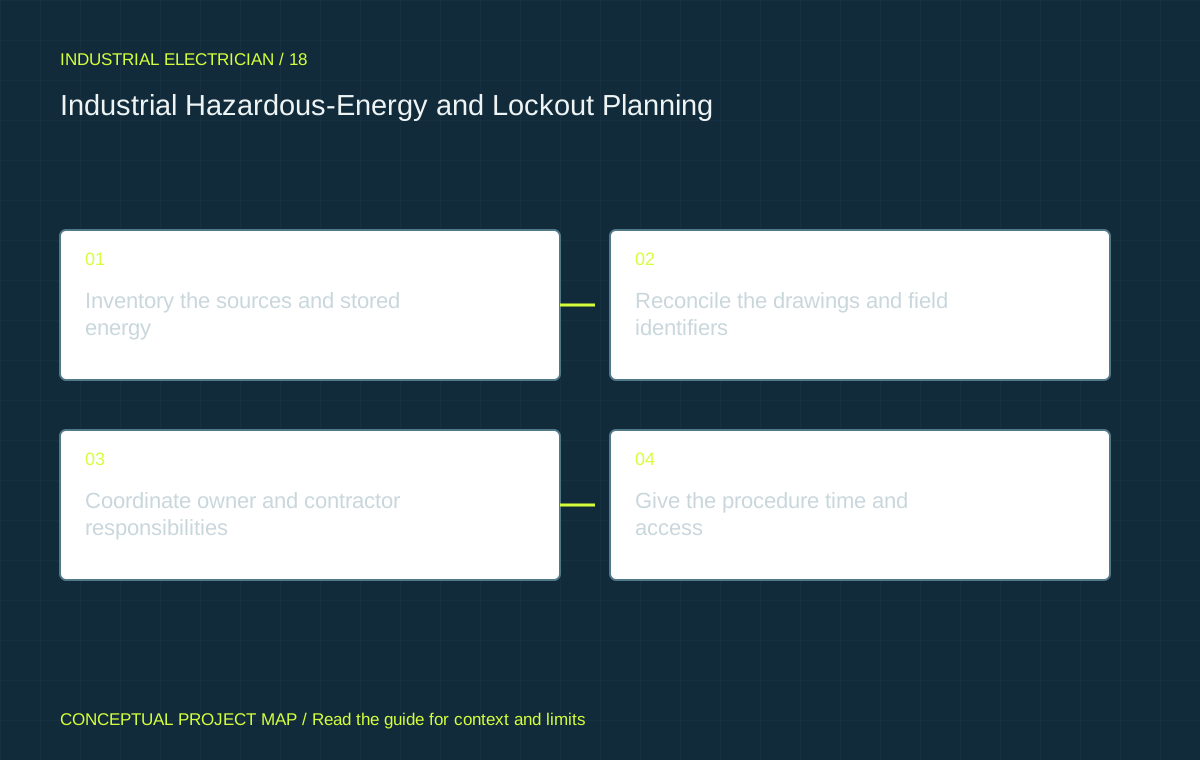
Hazardous energy includes stored and non-electrical sources. CCOHS explains the distinction between primary and residual energy. The facility’s qualified personnel must develop and carry out the applicable energy-control procedure. This guide helps an owner ask for that procedure and allocate time; it does not prescribe switching, testing for absence of voltage or applying locks.
Record each boundary as an identified drawing reference and physical equipment identifier. If the drawing and site label disagree, resolve it during preparation. Discovering an unidentified parallel feed during the outage can stop the entire job, even if the replacement hardware is ready. Keep controlled copies of the approved boundary and the latest revision available to the people executing the work.
A readiness review must be able to stop the outage
Schedule a readiness review early enough to postpone without stranding crews or production. The review should confirm approved drawings, permit status, utility attendance where required, replacement equipment condition, lifting access, specialist availability and the acceptance test plan. A purchase order is not evidence that the correct component is physically available. Inspect the shipped item, nameplate, accessories and documentation before the plant stops.
For obsolete switchgear, check mechanical interfaces as well as the electrical specification. A replacement device may need a different mounting arrangement, secondary disconnect, control voltage or interlock. For control changes, confirm the current software backup and restore method, compatible programming access and the person authorized to approve logic changes. Copying an old PLC file from a laptop is not proof that it matches the running plant.
Use three readiness states: ready, conditional and not ready. Every conditional item needs an owner, closure evidence and a final decision time. Avoid a long “all green” checklist that quietly assumes unresolved engineering work will happen on the day. The equipment approval guide covers another frequent late surprise: a machine or panel that arrives without the required Canadian approval evidence.
Put hold points and contingencies on the actual schedule
Build the schedule from dependencies rather than a list of labour durations. The utility outage, isolation release, removal, inspection of existing interfaces, installation, test completion and energization approval are separate gates. Some tasks can overlap; others cannot. Cable testing, for example, must be coordinated with equipment that could be damaged by the chosen test method. Only the qualified test team should determine the method and isolation details.
Give the critical path an explicit reserve and assign a decision maker to consume it. A contingency allowance hidden inside every trade’s estimate is difficult to manage. A visible reserve lets the project lead compare a discovered defect with the latest safe restart time. Include a defined cutoff for adding opportunistic work. An unplanned “while we are here” replacement can make a well-prepared outage miss production restart.
Arrange communications for a dead plant. Lighting, radios, phones, door access, alarms and network availability may all depend on the equipment being shut down. Identify how crews and operators will communicate, how emergency access will remain available and who can authorize a scope change. Temporary power is an engineered part of the job, not an extension-cord improvisation.
Commissioning starts before the first switching action
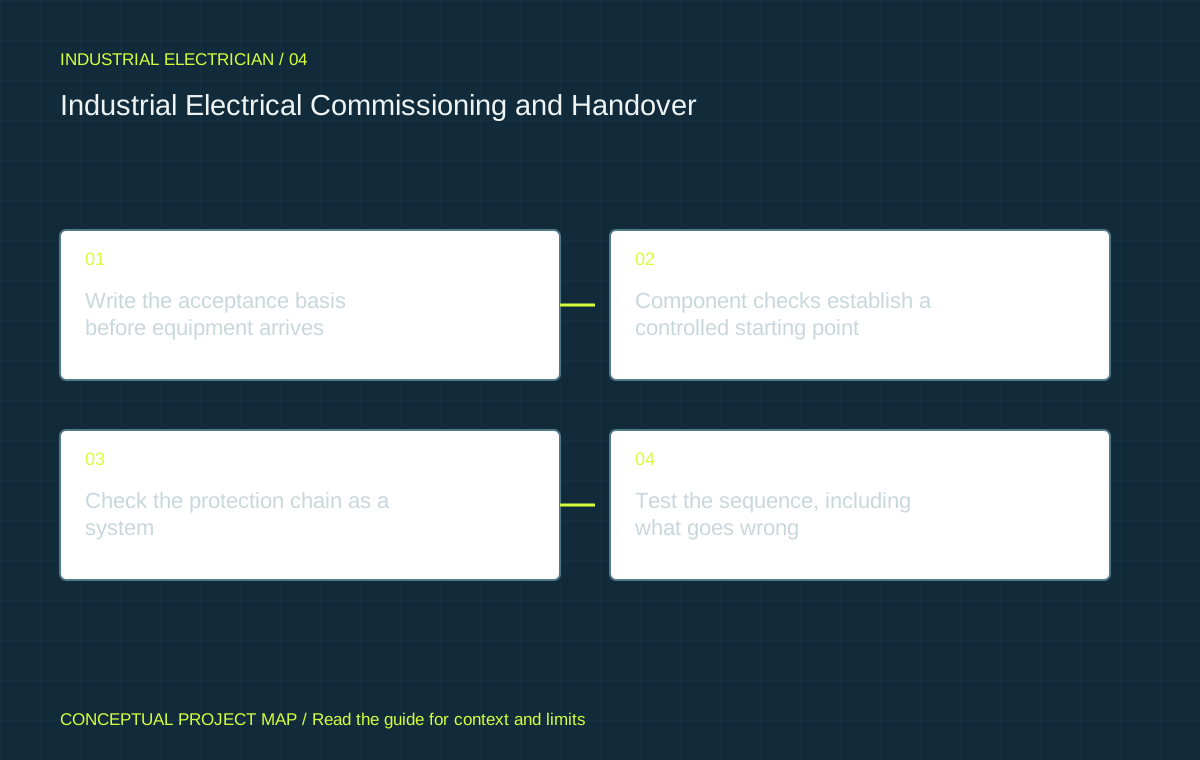
Prepare the acceptance record while there is still time to obtain missing drawings and vendor information. It should identify the test, responsible person, acceptance basis, required witness and record location. The commissioning plan can include mechanical inspection, protective device testing, circuit identification, controls checks and process validation, but the exact methods depend on the equipment and competent specialists.
Separate electrical readiness from process readiness. A motor can have a correct supply and still rotate a pump in an unacceptable direction or start before a downstream conveyor is ready. A protection relay can pass a bench test while an incorrect trip circuit prevents the breaker from opening. The commissioning guide explains how to connect component tests with integrated operating scenarios.
Create a punch list that distinguishes restart blockers from items that can be completed later under an approved plan. Missing protection evidence, unresolved safety interlocks and unidentified circuits should not be reclassified as cosmetic defects to protect a schedule. The person with energization authority must have the actual records, not just a verbal report that testing went well.
Treat restart as a controlled operating phase
Operations should own the production sequence, with electrical and controls support available for the agreed period. Record the intended condition of every modified system, temporary bypass and mode selector. Any bypass must be explicitly authorized, documented and reviewed against the facility’s safety requirements; it cannot become an undocumented shortcut after commissioning.
Log the first operating cycle, alarms, abnormal readings and operator observations. Compare them with the baseline collected before the shutdown. A new drive can run a motor without meeting the process’s pressure, flow or acceleration needs. A distribution upgrade can be electrically sound while an unexpected restart sequence produces a peak demand problem. Test the plant’s real operating cases instead of assuming that individual “run” indications prove success.
After handover, close temporary arrangements, reconcile redlines into the controlled drawing set and update maintenance records. Record software revisions, protective settings, equipment identifiers and spare-part changes. A post-outage review should focus on what preparation prevented or failed to prevent, not only whether the deadline was met. Use the outage briefing tool to gather the planning inputs for a site-specific discussion.
Make the quotation include the whole outage
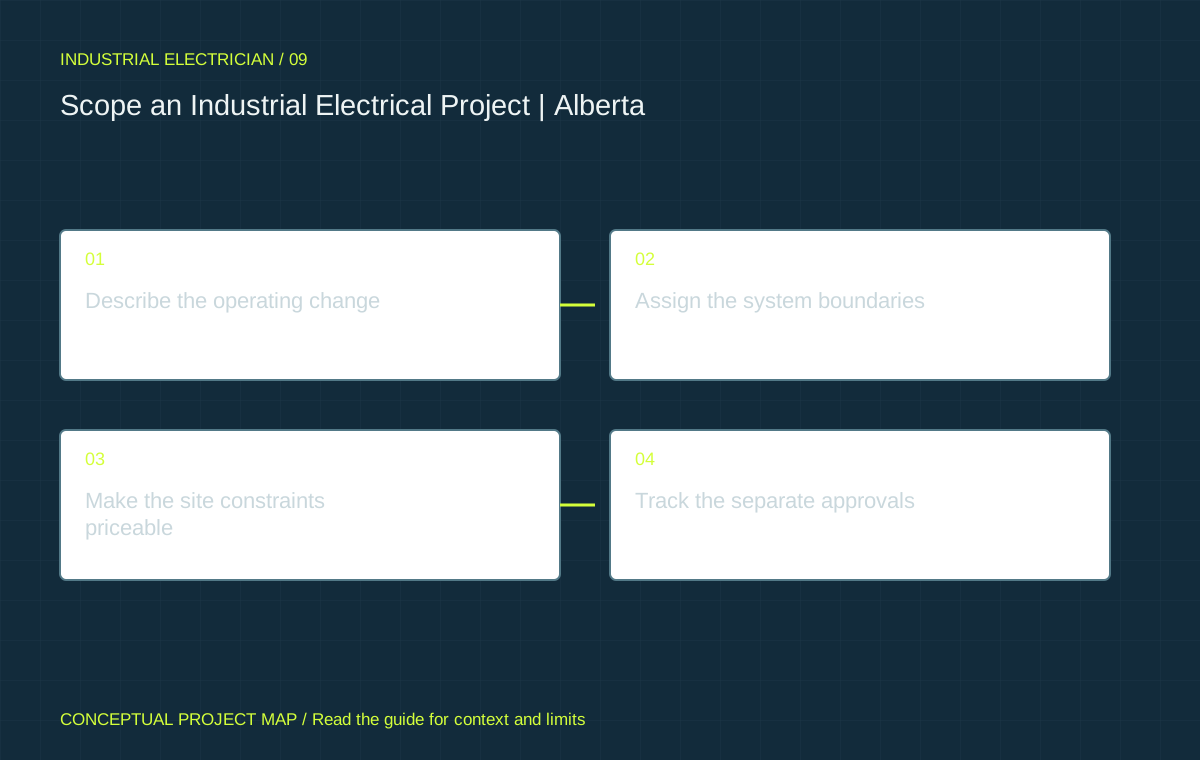
Ask bidders to identify what is included in engineering, utility coordination, permits, vendor attendance, testing, temporary supplies, production support and documentation. State who owns hidden-condition work and how an extension is authorized. The lowest installation-only price may omit the work needed to restart safely.
A useful request includes the site location, operating hours, current drawings, equipment photographs taken without opening energized enclosures, desired outcome, permissible outage window and known constraints. Do not upload confidential process recipes or access credentials. The project scope guide helps turn those inputs into an enquiry that can be priced with fewer assumptions.
Questions / Direct answers
Common questions
How early should an industrial electrical shutdown be planned?
Begin when the operating outcome and affected equipment are known. Engineering, utility arrangements, procurement, approval and production coordination can govern the programme. There is no reliable universal lead time; ask each responsible party to confirm its dependencies and decision dates.
Can maintenance work be added during a shutdown?
Only after reviewing the new work against isolation boundaries, test requirements, materials and the restart deadline. Set a formal cutoff and approval method. Extra work that changes the critical path should trigger a new decision, not an informal instruction.
What if the plant cannot restart after the planned outage?
Use the technically reviewed fallback or recovery plan and the named escalation authority. Do not energize equipment with unresolved safety or protection defects to recover the schedule. A defined minimum operating configuration makes that decision clearer.
Who authorizes energization?
The project must identify the applicable electrical, inspection, utility and facility authorities before work starts. Completion of one test or issuance of a permit does not automatically satisfy all release requirements.
Is an outage brief an electrical switching plan?
No. It describes business and project constraints. A switching and hazardous-energy procedure must be prepared and executed by the qualified people responsible for the actual system.
References / Jurisdiction matters
Sources & further reading
Confirm the actual location, permit authority and equipment instructions before relying on a requirement. A source from another jurisdiction is identified for context.
- Hazardous energy control programsCanadian Centre for Occupational Health and Safety · 2026-10-07
- Lockout / tag outCanadian Centre for Occupational Health and Safety · 2026-10-07
- OHS Act, regulation and codeGovernment of Alberta · 2026-10-07
- Electrical permits for contractors and annual facilities permitsCity of Calgary · 2026-10-07
- Meter installation and energization processENMAX Power · 2026-10-07
Do not open equipment, handle refrigerants or work on energized systems. Permits, qualified trades and inspection requirements vary by location. This guide does not design an installation or certify existing equipment.