The useful starting point
An MCC is more than a row of starters. Its usable capacity, interfaces and maintenance strategy determine how safely and predictably the plant can change.
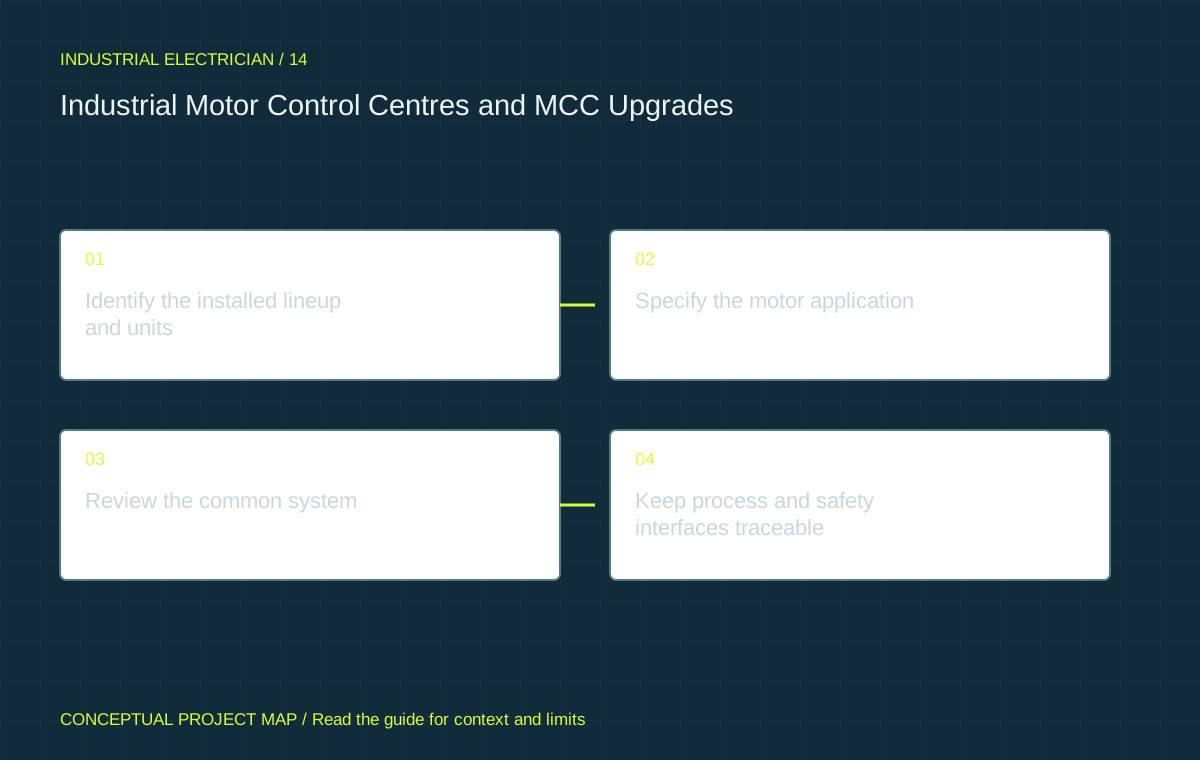
Identify the installed lineup and units
Collect lineup and unit identity, ratings, drawings, spare positions, modifications and maintenance records. Distinguish a physical empty space from a supported electrical addition. Legacy unit details and bus interfaces can govern compatibility.
Map each unit to its motor and process function. A unit labelled “spare” may still contain an undocumented circuit. Resolve field identification through a qualified survey before designing the change.
Specify the motor application
Define load type, motor data, starting duty, speed requirements and stopping behaviour. A starter, soft starter and VFD are not interchangeable procurement items. The motor system guide connects those decisions with the process.
For replacement units, compare control voltage, overload arrangement, external signals and operating modes. A current rating that looks suitable does not settle the complete application.
Review the common system
Assess the shared supply, bus, protection and the effect of added loads. A series of individually small changes can alter the lineup’s operating condition. Drives can also introduce thermal and waveform questions that were absent from the original arrangement.
Confirm the manufacturer-supported options and approval implications. Retrofitting a unit may require engineered interfaces and updated documentation. Do not equate a similar mechanical envelope with compatibility.
Keep process and safety interfaces traceable
Document commands, permissives, feedback and loss-of-signal behaviour. Identify which functions are standard control and which require separate machinery-safety design and validation.
For intelligent units, record network and software requirements, supported revisions and restore material. A communications link should not become an unidentified single point of failure. State the intended fallback and how it will be tested.
Plan maintainability after the upgrade
Decide how the owner will obtain spares, maintain settings and identify the accepted unit configuration. An upgrade with several unique unsupported variants can make future troubleshooting harder.
Coordinate the outage and commissioning, including the integrated process sequence. Retain the unit, motor, controls and protective records together so the next technician can understand the whole function.
Questions / Direct answers
Common questions
Can any starter bucket fit an existing MCC?
No. The exact lineup, interfaces, ratings, support and approval requirements must be checked. Physical resemblance is not compatibility evidence.
Can a VFD be added inside an existing MCC?
Possibly, with the appropriate system, thermal, controls, protection and approval review. The selected arrangement must suit the actual motor duty and equipment.
What should be provided for an MCC enquiry?
Lineup and unit information, current drawings, motor duty, existing issues, required change, available shutdown and known controls interfaces.
References / Jurisdiction matters
Sources & further reading
Confirm the actual location, permit authority and equipment instructions before relying on a requirement. A source from another jurisdiction is identified for context.
- Electrical codes and standards currently in forceAlberta Municipal Affairs · 2026-10-07
- Variable frequency drives: application and process assessmentNatural Resources Canada · 2026-10-07
- Power cable specifications and drive-specific cable guidanceRockwell Automation; product-specific guidance · 2026-10-07
- Electric motors: energy efficiency reference guideNatural Resources Canada · 2026-10-07
Do not open equipment, handle refrigerants or work on energized systems. Permits, qualified trades and inspection requirements vary by location. This guide does not design an installation or certify existing equipment.