The useful starting point
The controller can only execute the behaviour that was specified and validated. Good automation starts with readable process intent and clear responsibility for every interface.
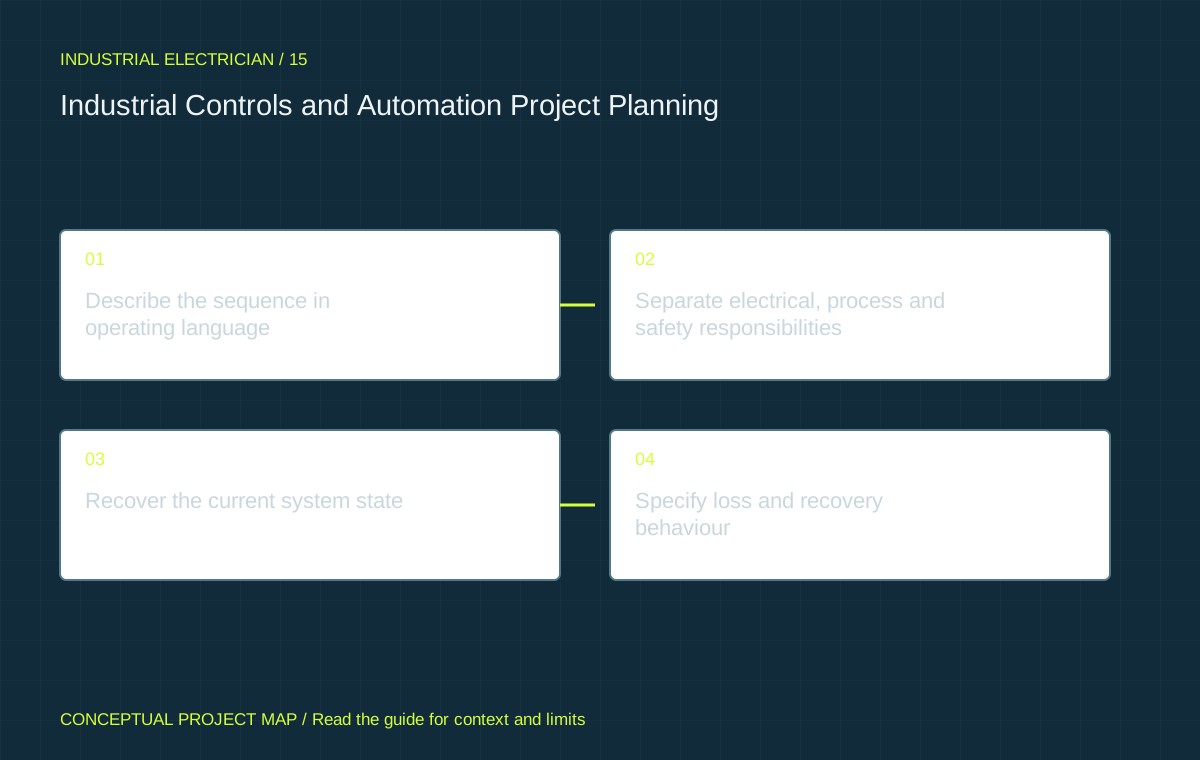
Describe the sequence in operating language
Document normal operation, starts, stops, modes and transitions. An operator should be able to read the intended behaviour without interpreting program code. A cause-and-effect schedule links an input or condition with the expected response and can guide both programming and testing.
Include equipment availability, process permissives and recovery after an interrupted cycle. “Automatic” needs a definition: which commands are allowed, when the sequence advances and what happens when a required input is missing.
Separate electrical, process and safety responsibilities
Assign ownership for field wiring, panel design, equipment approval, instrumentation, communications, programming and process acceptance. A control change can cross all of these boundaries even if it begins as a small software request.
Safety-related functions require the applicable competent design and validation. Do not assume a standard PLC stop instruction, HMI button or communications timeout provides the required safety performance. Identify the safety scope explicitly before changes are made.
Recover the current system state
Identify running hardware, software revisions, parameter files, licensed programming access and current backups. Confirm that the saved project matches the accepted running arrangement. An old file with a familiar name can be misleading.
Document unsupported components and vendor dependencies. A proposed upgrade may need more than a processor swap if the network, I/O or application uses obsolete features. Define the migration and fallback strategy before the outage.
Specify loss and recovery behaviour
Decide how the process should respond to lost signals, communications, power or equipment readiness. Those responses depend on the process and risk assessment. A default that works for one conveyor may be unacceptable for a pump, heater or batch system.
Keep access and credentials controlled. Use an appropriate private handover for accounts and recovery material, while drawings and operating instructions remain available to the people who need them. Never publish plant credentials through a quoting form.
Test the real interfaces
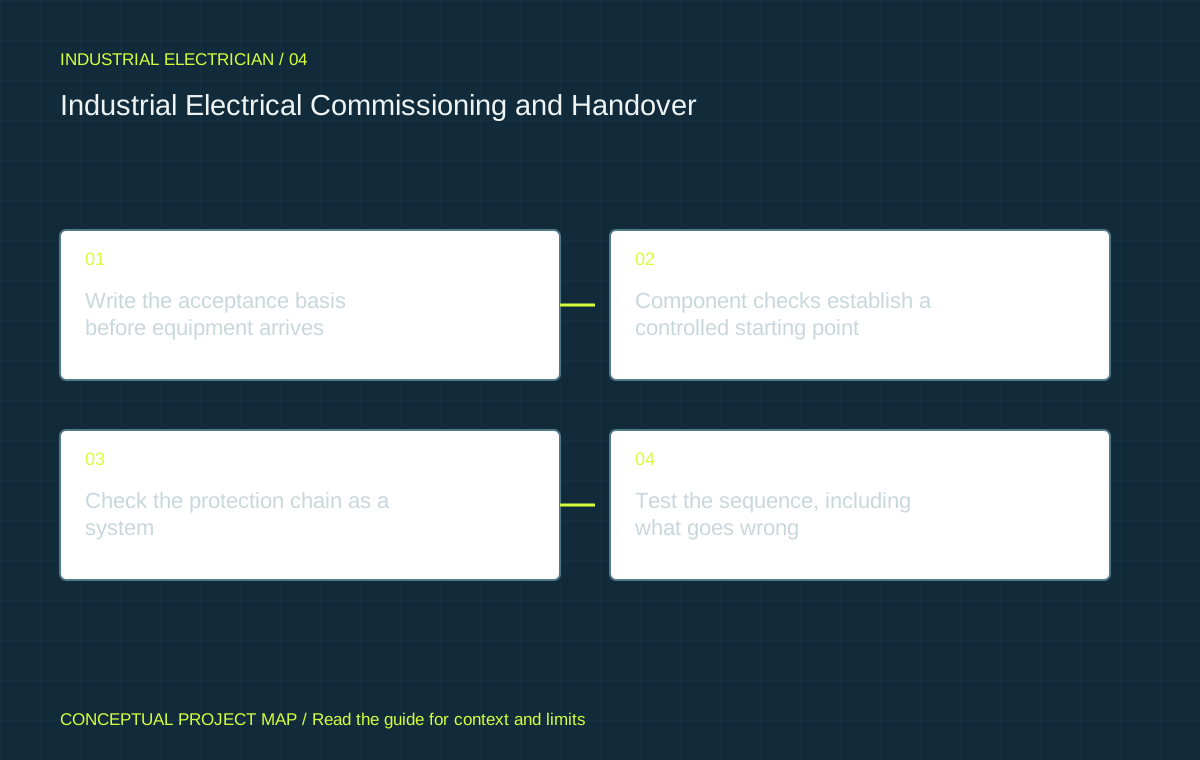
Factory or offline testing can find logic and interface errors early. Site commissioning must then verify the actual installation and process. State test cases, safe methods, acceptance criteria, witnesses and record requirements.
The commissioning chapter covers the distinction between a successful command and an accepted operating system. Handover should include readable sequences, current backups, revisions, alarm information and restore responsibilities.
Questions / Direct answers
Common questions
Can an HMI stop button replace a safety function?
Do not assume it can. Safety-related functions require their own applicable design and validation. Ordinary process control needs to be distinguished from that scope.
What is a useful automation specification?
Readable operating sequences, modes, interfaces, abnormal and recovery behaviour, acceptance tests and clear responsibilities, supported by the current hardware and software information.
Should PLC backups be checked before a shutdown?
Yes. The project should establish the accepted current state, usable restore material and programming access before production stops.
References / Jurisdiction matters
Sources & further reading
Confirm the actual location, permit authority and equipment instructions before relying on a requirement. A source from another jurisdiction is identified for context.
- Electrical codes and standards currently in forceAlberta Municipal Affairs · 2026-10-07
- Electrical equipment approval identifiers and field evaluationAlberta Municipal Affairs; historical interpretation, confirm current applicability · 2026-10-07
- OHS Act, regulation and codeGovernment of Alberta · 2026-10-07
- Hazardous energy control programsCanadian Centre for Occupational Health and Safety · 2026-10-07
Do not open equipment, handle refrigerants or work on energized systems. Permits, qualified trades and inspection requirements vary by location. This guide does not design an installation or certify existing equipment.