The useful starting point
The approval question belongs in procurement. Waiting until a machine is on the production floor can create rework, specialist scheduling and an avoidable delay to energization.
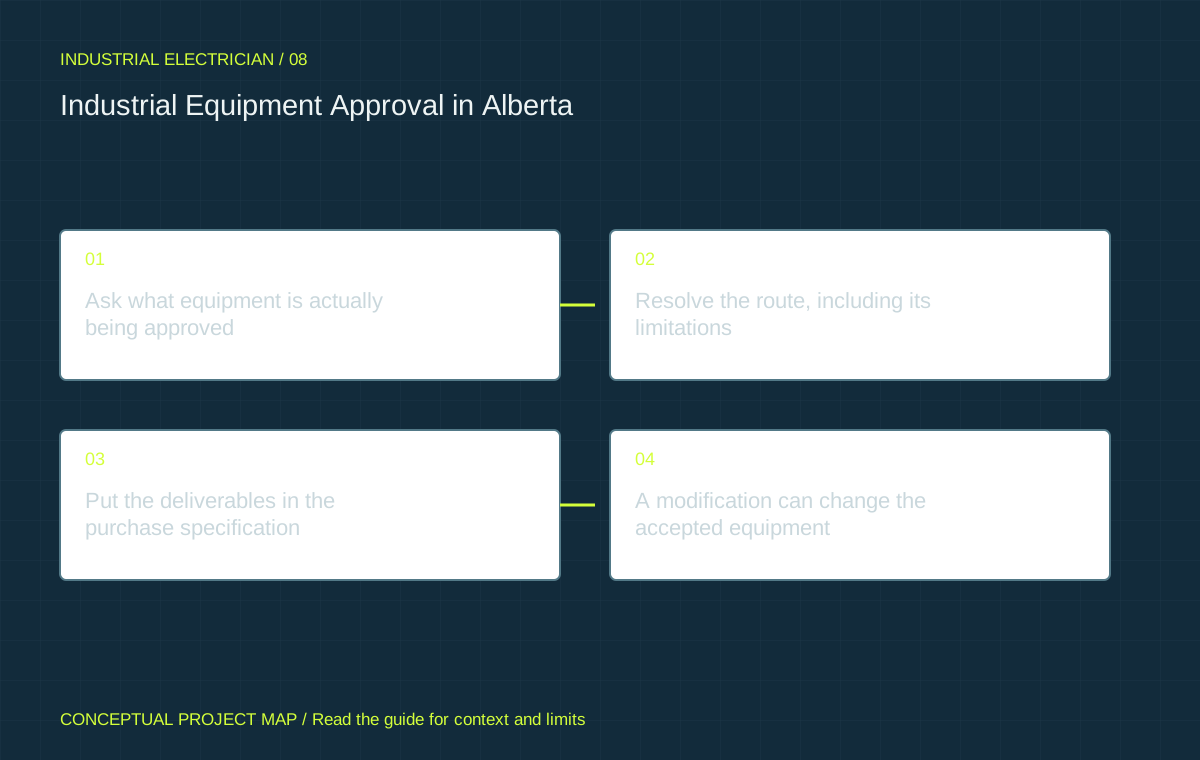
Ask what equipment is actually being approved
Record the exact machine, panel or assembly model, serial identification and scope. Component approvals, panel approval and a complete machine’s suitability are different questions. A package of certified parts does not automatically establish that the assembled equipment is approved for the intended Canadian installation.
Ask the supplier for the approval identifier and documentation applicable to the delivered equipment. Compare that evidence with the model, ratings and configuration on the order. A catalogue photograph or statement that a product is “used worldwide” is insufficient to resolve the installation requirement.
Bring the approval body and inspection authority into uncertain cases before committing to delivery. The responsible parties need the equipment information, intended use and site conditions. This portal does not interpret a certification mark or issue an approval.
Resolve the route, including its limitations
Depending on the equipment and situation, an accepted certification or an applicable field-evaluation route may be relevant. Alberta has published an interpretation discussing approval identifiers and field evaluation. That document is historical and must be checked against current code, STANDATA and the authority’s requirements.
Do not assume field evaluation is available for every product or hazardous-location application. Ask the proposed evaluation body to confirm scope, information needs, exclusions, timing and likely corrective work. A promise that “someone can sticker it later” is not a dependable procurement plan.
The electrical installation and equipment approval also have distinct boundaries. A permit or installation inspection should not be presented as automatic proof that every imported assembly has the required equipment approval.
Put the deliverables in the purchase specification
Require the relevant electrical drawings, ratings, manuals, parts information and approval evidence in a usable form. State the Canadian supply conditions and site environment. Identify differences from the supplier’s standard configuration, including voltage, frequency, control supply and safety interfaces.
Define who pays for evaluation and corrections, where the work will happen and how it affects delivery and commissioning. The contract should not leave the owner discovering after shipment that a major rebuild is necessary. Ask for design review before fabrication if the equipment is custom or the approval route is uncertain.
Include commissioning and handover records. Accepted equipment still needs appropriate installation, controls integration and process validation. Approval solves a particular compliance question; it does not prove the machine meets the owner’s production requirements.
A modification can change the accepted equipment
Replacing a component, altering a control panel, adding a drive or changing the enclosure can affect the approved configuration. The project must determine what review or re-evaluation is required. Keep the original identification and document the modification; do not remove a label to make a problem less visible.
For used machinery, obtain the existing drawings, modification history and approval evidence before purchase where possible. A machine that operated in another jurisdiction may need review for the new installation. The delivered state matters more than the model’s original marketing description.
Retain the accepted drawings and configuration with the asset record so maintenance staff can distinguish an approved replacement from a design change. The maintenance programme should preserve that boundary.
Make approval part of the project critical path
Approval review can require documentation, access, testing and corrective work. Plan it alongside installation and production readiness. Avoid setting a fixed start-up date based only on the shipping estimate, particularly for custom or imported equipment.
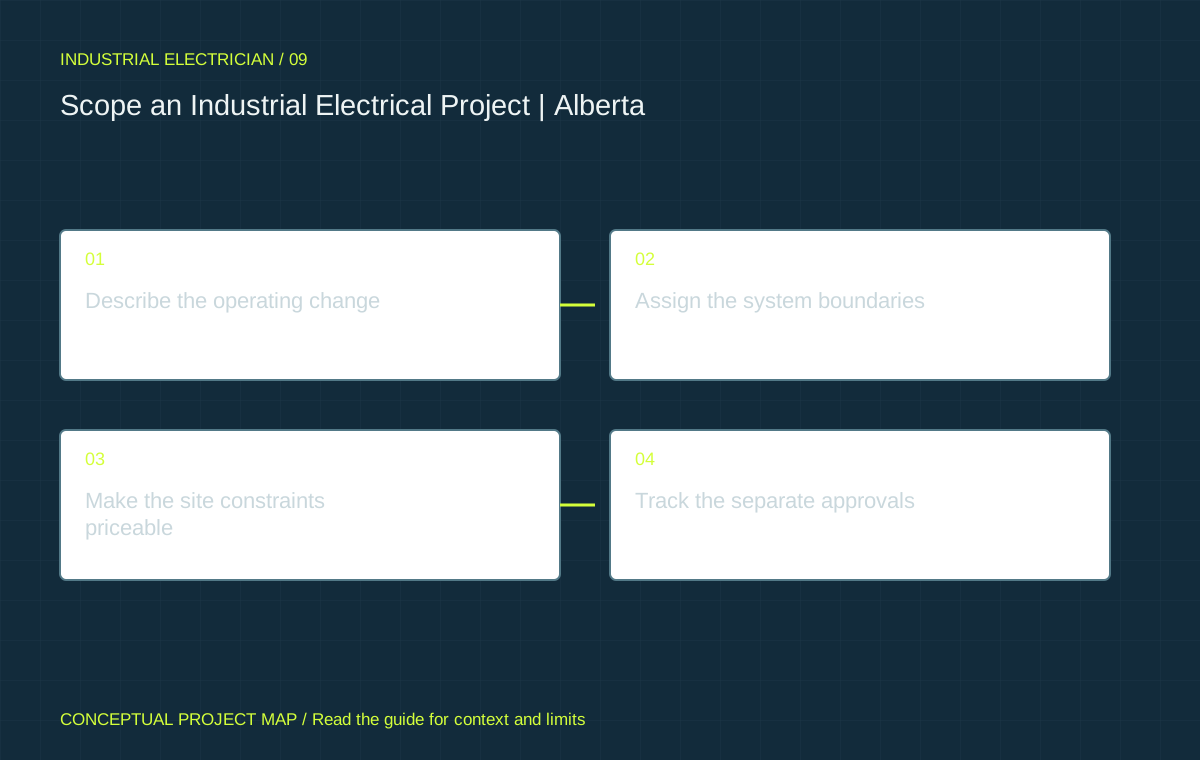
A useful enquiry states what is being purchased or changed, the supplier’s documentation, intended location and required operating date. Ask the team to identify unresolved approval assumptions in the quotation. The project scope guide offers a structure for those responsibilities.
Questions / Direct answers
Common questions
Does a CE mark establish Canadian electrical approval?
Do not assume it does. Resolve the accepted approval evidence for the exact equipment and intended installation with the relevant body and authority.
Are approved components enough to approve a complete panel?
Not automatically. The assembled equipment and its configuration need the applicable approval evidence. Component documentation is useful input, but it does not settle the complete assembly question.
Can a used industrial machine require a new review?
Yes. Its delivered configuration, modifications, new installation and available approval evidence need assessment. Previous operation somewhere else is not a substitute for that review.
Is the historical Alberta approval interpretation current law?
No. It is a dated technical source that identifies issues to investigate. Verify current code, STANDATA and authority requirements before applying it.
References / Jurisdiction matters
Sources & further reading
Confirm the actual location, permit authority and equipment instructions before relying on a requirement. A source from another jurisdiction is identified for context.
- Electrical equipment approval identifiers and field evaluationAlberta Municipal Affairs; historical interpretation, confirm current applicability · 2026-10-07
- Electrical codes and standards currently in forceAlberta Municipal Affairs · 2026-10-07
Do not open equipment, handle refrigerants or work on energized systems. Permits, qualified trades and inspection requirements vary by location. This guide does not design an installation or certify existing equipment.