The useful starting point
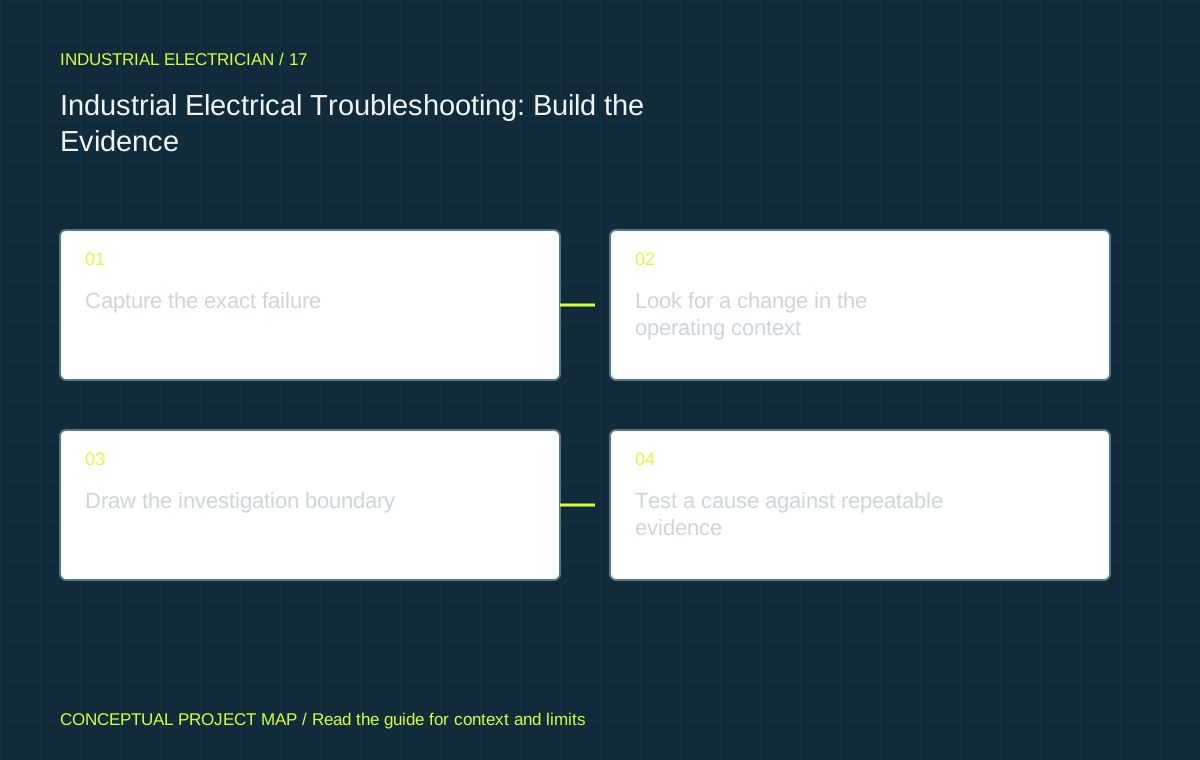
A nuisance trip is a symptom. The useful investigation identifies what changed, where it changed and how that event relates to the equipment that stopped.
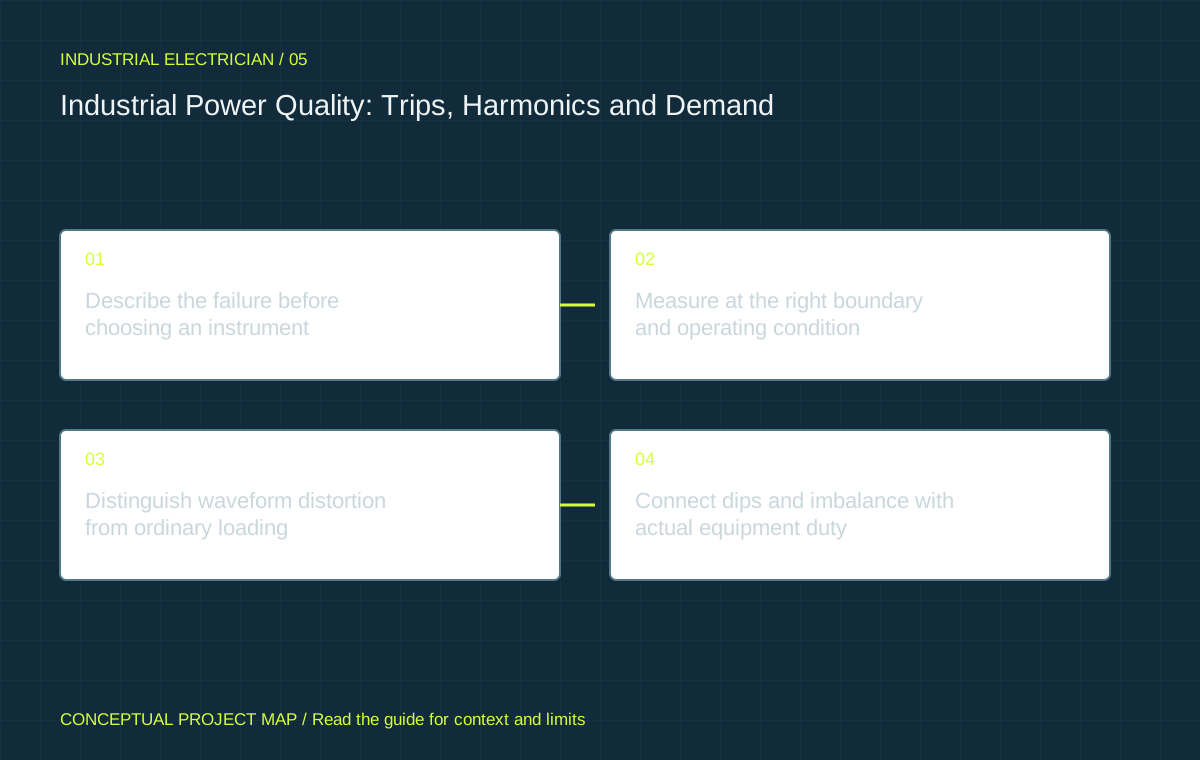
Describe the failure before choosing an instrument
Record the exact equipment, fault code, production state and time of the event. “Power problem” is too broad to guide an investigation. A drive undervoltage event during a large motor start suggests different questions from a PLC reset after washdown or an intermittent instrument signal. Keep the operator’s observation alongside the controller and protection records.
Separate loss of supply, voltage disturbance, control-power interruption, communications failure and a process interlock. One machine stopping does not establish that the utility supply failed. If neighbouring equipment remained stable, that observation can help narrow the investigation, but it does not eliminate an electrical cause inside the affected branch.
Use a shared time reference where practical. Unsynchronised device clocks can make the first event look like a consequence. Preserve original logs before resetting equipment, within the facility’s operating and safety procedures. The goal is a repeatable account of the failure, not an improvised live test.
Measure at the right boundary and operating condition
The qualified investigator chooses suitable instruments, measurement locations and safe installation methods. Agree on what needs to be captured: steady trends, short events, motor starting, demand peaks or interactions between loads. A brief spot reading may be useful but cannot exclude an intermittent event that occurs on another shift.
Monitor relevant operating cases and record which loads were running. A measurement at the main supply may show a system-wide issue while a local branch measurement helps identify a feeder or equipment condition. The right arrangement depends on the question and the available access. Instruments and personnel must be appropriate for the electrical environment.
State the limitations in the report. An uneventful monitored period means no relevant event was recorded during that period; it does not prove that a complaint was imaginary. Match the monitoring window with production, weather, scheduled starts and other known triggers.
Distinguish waveform distortion from ordinary loading
Nonlinear loads can draw a current waveform that differs from a sinusoid. The resulting behaviour depends on the loads and the electrical system they share. A facility adding drives, electronic power supplies or other nonlinear equipment should consider the combined operating condition, not simply the number of installed devices.
Power factor needs careful language. Schneider Electric distinguishes true power factor, which includes harmonic effects, from displacement power factor. A good displacement value does not alone describe the complete current waveform. Record the instrument’s definition and units when comparing reports.
Do not specify a filter or capacitor bank from a single poor reading. The solution must suit the measured condition, network and operating range. Existing power-factor equipment can change how a system responds to harmonics. The designer should evaluate compatibility and resonance concerns rather than treating capacitors as a universal energy-saving device.
Connect dips and imbalance with actual equipment duty
A large start, supply disturbance or local connection problem can affect equipment differently. Sensitive control power and drives may respond before larger machinery visibly slows. An investigator should connect the event’s depth and duration with the affected equipment’s operating requirements and recorded fault.
Phase imbalance deserves attention because balanced aggregate power can conceal unequal phase conditions. Do not assume that a balanced-current calculator describes an unbalanced plant. Compare the actual phase measurements and the motor or equipment manufacturer’s limits. The three-phase guide explains why kW, kVA and current answer different questions.
Changes to protection settings should be reviewed through the approved design process. Increasing a setting to stop nuisance trips can hide the symptom while compromising another requirement. Identify the initiating condition first and preserve the protection’s intended function.
Match the remedy to the established cause
Potential remedies can involve operating sequence, equipment condition, control-power support, drive input treatment, distribution changes or utility coordination. A valid recommendation states which observed problem it addresses and how the result will be verified. “Install power conditioning” is too vague to procure or assess.
Ask for before-and-after evidence using comparable operating cases. If a new filter is fitted during a low-production period, a quieter event log may reflect the changed duty. Include an agreed follow-up window and acceptance basis. A commissioning plan should carry the power-quality acceptance into project closeout.
Keep demand cost separate from equipment reliability. Reducing a peak may affect billing under the applicable tariff, but the tariff, measurement period and plant duty must be verified. Energy, demand and power-factor charges cannot be replaced by a simple cents-per-kWh model.
Questions / Direct answers
Common questions
Can harmonics cause industrial equipment problems?
They can contribute to electrical and equipment interactions, but symptoms need measurement and context. Identify the actual waveform, operating state, affected boundary and equipment requirements before choosing a remedy.
Will capacitors fix every low power-factor problem?
No. True and displacement power factor differ, and existing nonlinear loads matter. A designer must assess the network and suitable equipment rather than adding a bank from one reading.
Does a clean one-hour survey rule out a power-quality problem?
No. An intermittent event may not occur during that period. State the monitored duty and limitations, then align further investigation with known triggers.
Can the portal calculate harmonic filter size?
No. Filter selection requires a site-specific electrical assessment, measured or adequately modelled operating cases and manufacturer-compatible design.
References / Jurisdiction matters
Sources & further reading
Confirm the actual location, permit authority and equipment instructions before relying on a requirement. A source from another jurisdiction is identified for context.
- True and displacement power factorSchneider Electric · 2026-10-07
- Power factor correction and detuned capacitor banksSchneider Electric; product-specific guidance · 2026-10-07
- Variable frequency drives: energy efficiency reference guideNatural Resources Canada · 2026-10-07
- Power cable specifications and drive-specific cable guidanceRockwell Automation; product-specific guidance · 2026-10-07
Do not open equipment, handle refrigerants or work on energized systems. Permits, qualified trades and inspection requirements vary by location. This guide does not design an installation or certify existing equipment.