The useful starting point
An instrument problem can be mechanical, electrical, configuration or process related. Define the complete measurement chain before replacing the visible device.
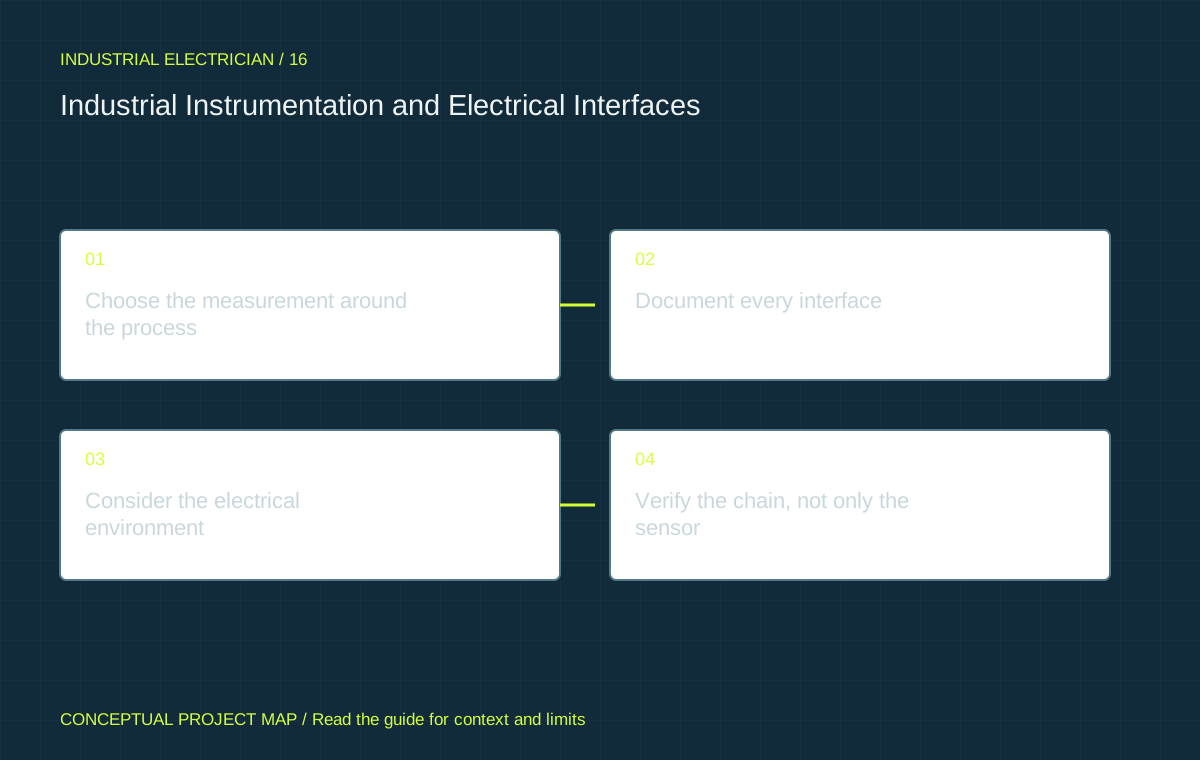
Choose the measurement around the process
Define the variable, useful range, medium, temperature, pressure and required response. The process specialist and instrument supplier should confirm the device and wetted-material suitability. A transmitter with an electrical output that matches the PLC may still be unsuitable for the material or location.
Identify where the measurement belongs and which operating states matter. A sensor can be accurate at its location while failing to represent the process condition the operator needs.
Document every interface
Record instrument identity, power requirements, signal type, controller input, scaling, units and alarm use. Do not describe a device only as “analogue.” The complete signal specification and configuration need to agree across field equipment and controller.
For a replacement, compare the old and new failure behaviour as well as normal output. A lost or invalid signal must have a reviewed process response rather than silently becoming a plausible operating value.
Consider the electrical environment
Signal routing, bonding, shielding and separation need application-specific design and manufacturer guidance. Nearby drive and motor wiring can change the interference environment. Avoid generic prescriptions transplanted from a different product or system.
Review the location’s moisture, vibration, washdown and classification requirements. Entries, enclosures and accessories belong in the suitability review, not just the transmitter body.
Verify the chain, not only the sensor
A useful acceptance plan distinguishes device calibration from a loop check and process validation. A calibrated device can still be scaled incorrectly in the controller, displayed in the wrong units or mapped to the wrong alarm.
The competent team defines safe test methods, traceability and acceptance. Record device identity, configuration, reference evidence and observed result. Where a signal participates in a safety-related function, the applicable specialist validation is a separate requirement.
Leave clear operating and maintenance records
Retain the instrument list, ranges, units, wiring references, configuration and calibration records. Give operators a readable explanation of alarms, invalid signals and escalation. Do not rely on the programmer’s laptop as the only record.
The controls chapter links instrumentation with the process sequence. Include instrument and integrated test requirements in the project brief before procurement.
Questions / Direct answers
Common questions
Does calibrating a transmitter prove the PLC value is correct?
No. The signal path, controller configuration, scaling, units and display need the applicable checks as well.
Can a replacement sensor use the same wiring?
Only after checking the actual device and interface requirements. Similar appearance or connector size does not establish electrical or process compatibility.
What information helps scope an instrumentation problem?
The process variable, device and input identity, expected range, units, symptoms, operating conditions and available drawings or configuration records.
References / Jurisdiction matters
Sources & further reading
Confirm the actual location, permit authority and equipment instructions before relying on a requirement. A source from another jurisdiction is identified for context.
- Electrical codes and standards currently in forceAlberta Municipal Affairs · 2026-10-07
- OHS Act, regulation and codeGovernment of Alberta · 2026-10-07
- Power cable specifications and drive-specific cable guidanceRockwell Automation; product-specific guidance · 2026-10-07
- Electrical equipment approval identifiers and field evaluationAlberta Municipal Affairs; historical interpretation, confirm current applicability · 2026-10-07
Do not open equipment, handle refrigerants or work on energized systems. Permits, qualified trades and inspection requirements vary by location. This guide does not design an installation or certify existing equipment.