The useful starting point
A hazardous-location specification starts with the material, process and release conditions. A rugged enclosure or a weatherproof label does not establish suitability for an explosive atmosphere.
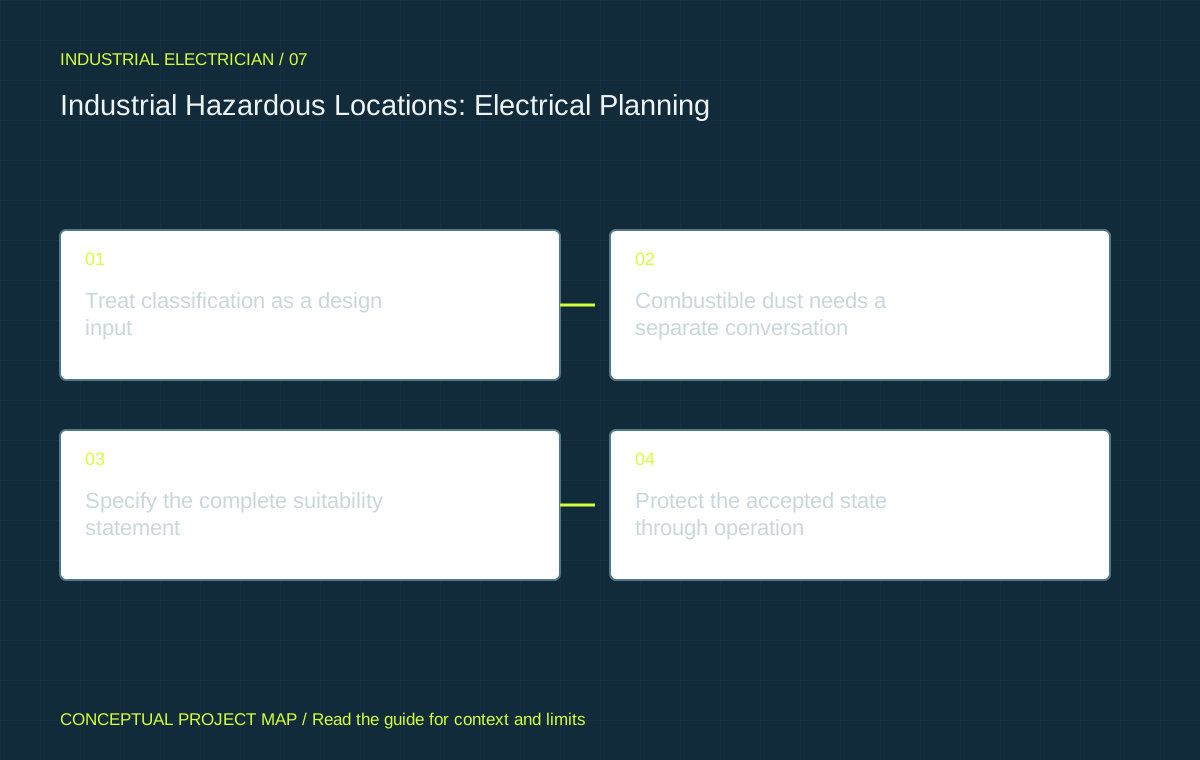
Treat classification as a design input
Identify the materials handled, their properties, the process arrangement and where a release or accumulation can occur. Gas, vapour and dust questions differ. The responsible specialists determine the applicable classification and its extent using the actual process and governing requirements; a contractor should not have to infer it from a vague note that says “industrial area.”
Record the classification drawings and the basis behind them. Ventilation, material handling, temperature and operating modes can affect the assessment. A room’s use can change while its electrical equipment remains unchanged. Review classification when the process, material or release conditions change.
Alberta’s electrical codes and standards page identifies the installation code in force. Exact hazardous-location design rules, equipment selection and inspection requirements must be resolved with the current code and appropriate competent specialists.
Combustible dust needs a separate conversation
Dust can be a combustible hazard even when a process does not use a flammable liquid. The material and particle behaviour matter, and visible housekeeping observations alone cannot determine the complete hazard. CCOHS explains the factors associated with combustible dust. A dust hazard assessment and electrical area classification are related, but they are not interchangeable deliverables.
Map dust-producing, collection and transfer equipment. Consider where dust may escape, settle or be disturbed, and identify the relevant cleaning and operating assumptions. Electrical equipment must be evaluated for the actual location and material conditions, while the broader process requires its own fire and explosion prevention measures.
Do not make an equipment cabinet “dust safe” by enclosing it without a thermal and approval review. A tighter enclosure can change heat rejection and service access. The specified product and installation need to satisfy all relevant requirements together.
Specify the complete suitability statement
The purchase specification should connect the classification with the equipment’s approval, material group, temperature suitability, environmental exposure and installation arrangement as applicable. A certification logo alone may not establish every required attribute. Confirm the exact model and its documentation rather than accepting a generic catalogue family.
Include cable entries, accessories, seals and any associated equipment in the design review. Changing an entry or component can affect the accepted assembly. This portal does not provide connection instructions; the installation must follow the applicable code, product instructions and approved design.
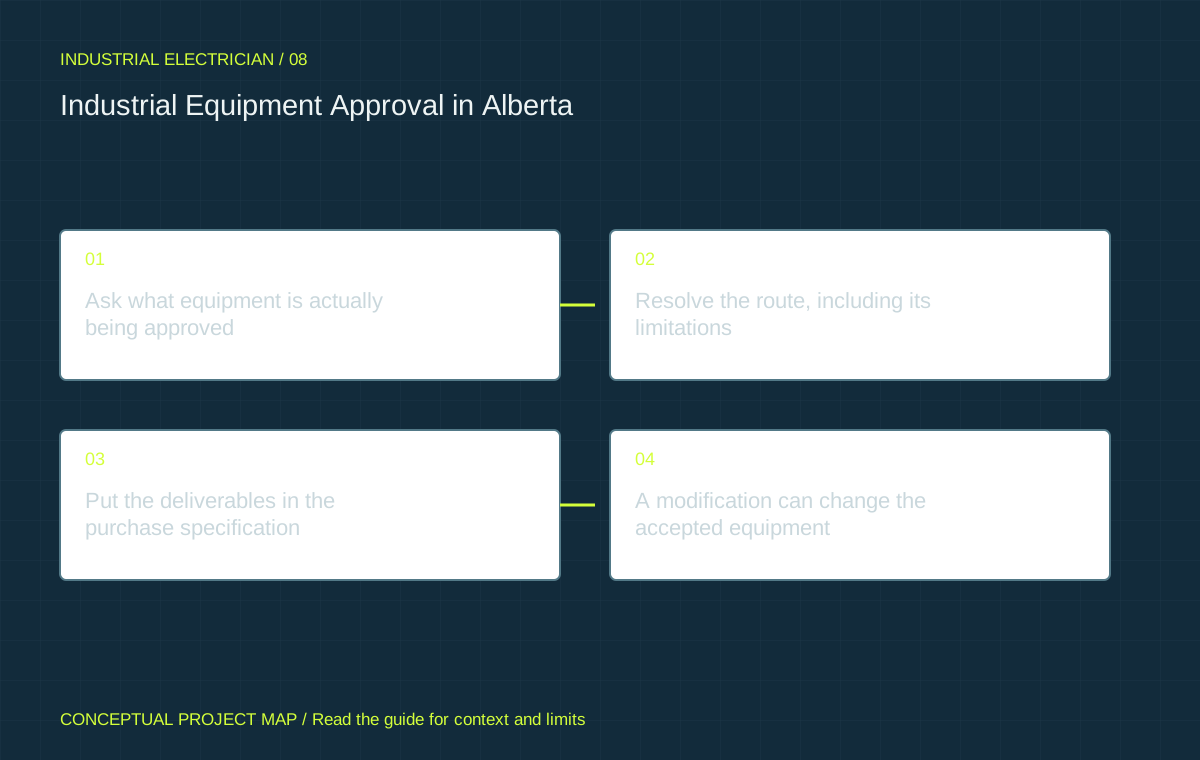
The equipment approval guide explains why Canadian approval evidence and hazardous-location suitability should be checked before delivery. A field evaluation is not a universal route for every equipment type or application.
Protect the accepted state through operation
Maintain the information that establishes suitability. Record equipment identity, approval documentation, area drawing reference and permitted replacement parts. An ordinary replacement device that fits the hole is not necessarily suitable for the location.
Inspection and maintenance should address the particular equipment and environment under the qualified team’s plan. Corrosion, impact, missing covers, altered entries or undocumented substitutions need review. Assign responsibility for identifying process changes that could invalidate the area assumptions.
Plan safe access, isolation and production arrangements before maintenance. “Explosion proof” does not mean equipment can be opened or modified casually in service. The facility’s procedures and qualified personnel must govern the actual task.
Give the project team the process facts early
A useful enquiry identifies the site, process, materials, existing classification information, proposed change and shutdown limits. Supply available drawings through an appropriate private channel. Do not publish confidential process information or ask an unqualified person to collect live cabinet details.
Ask who owns the classification, equipment suitability, installation design and acceptance. When several firms are involved, make the boundaries explicit. A gap between the process designer and electrical installer is a predictable place for expensive rework.
Budget for engineering, approval review, specialised equipment, inspection, documentation and maintenance access. The cost drivers guide shows why a generic per-point electrical price is particularly misleading in this environment.
Questions / Direct answers
Common questions
Does weatherproof mean suitable for a hazardous location?
No. Weather exposure and hazardous-atmosphere suitability are different requirements. The actual classification and equipment approval must be checked by the responsible specialists.
Can combustible dust create an electrical classification issue?
Yes, depending on the material and process conditions. Do not determine classification from room appearance alone; obtain the appropriate process and electrical assessment.
Can equipment be field evaluated for any classified area?
Do not assume so. Evaluation routes have limitations, and suitability for the exact application must be resolved with the appropriate body and authority before procurement.
Who should provide hazardous-area drawings?
Name the competent party responsible for the classification and its documented basis in the project scope. The electrical design and installation should use the accepted information and record later changes.
References / Jurisdiction matters
Sources & further reading
Confirm the actual location, permit authority and equipment instructions before relying on a requirement. A source from another jurisdiction is identified for context.
- Electrical codes and standards currently in forceAlberta Municipal Affairs · 2026-10-07
- Combustible dustCanadian Centre for Occupational Health and Safety · 2026-10-07
- Electrical equipment approval identifiers and field evaluationAlberta Municipal Affairs; historical interpretation, confirm current applicability · 2026-10-07
- OHS Act, regulation and codeGovernment of Alberta · 2026-10-07
Do not open equipment, handle refrigerants or work on energized systems. Permits, qualified trades and inspection requirements vary by location. This guide does not design an installation or certify existing equipment.