The useful starting point
Continuity can mean riding through, shutting down safely or restarting predictably. Define that outcome for each load before choosing the backup equipment.
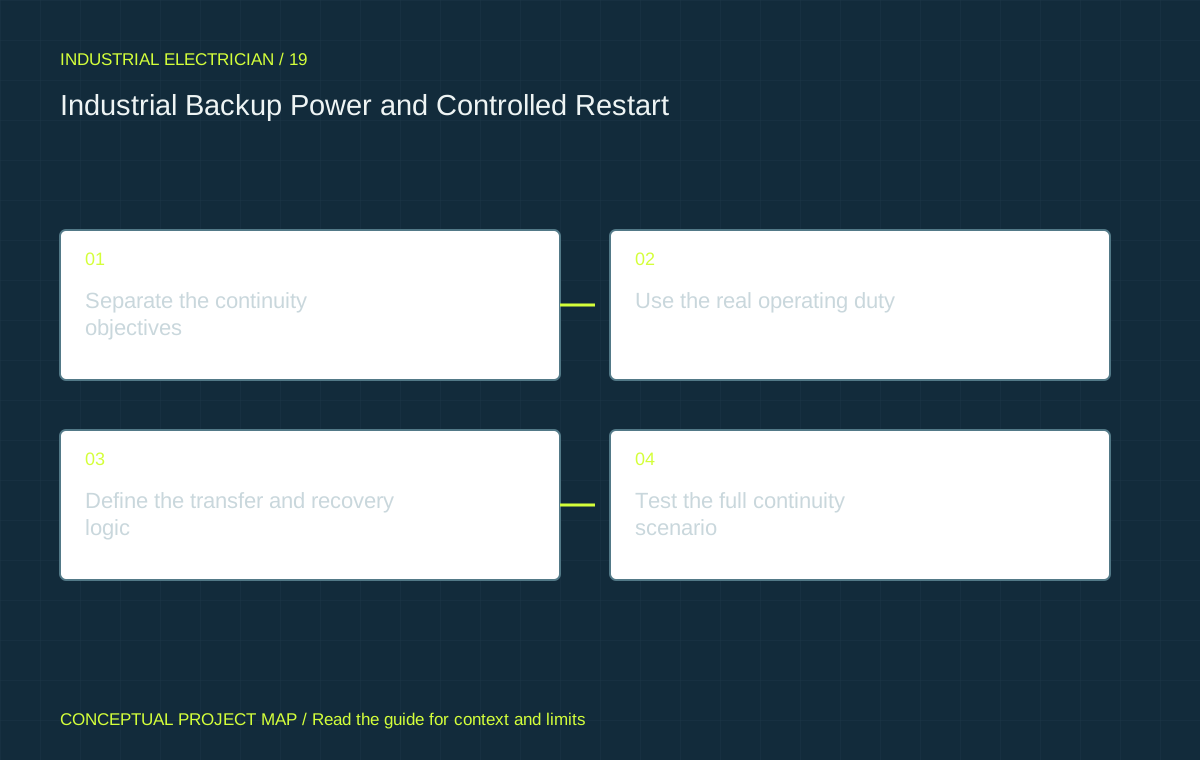
Separate the continuity objectives
A control server may need uninterrupted operation; a process may need enough time to reach a safe state; another load may tolerate a delay before standby operation. These are different specifications. Assign the desired behaviour and tolerable interruption to each critical function.
Include dependencies. A backed-up controller is not useful if its network, instruments or required cooling disappear. A generator capable of supplying a motor may not solve the process’s interrupted sequence.
Use the real operating duty
Document steady loads, starting and step-loading behaviour, sensitive electronics and nonlinear loads. The specialist must assess the selected source and supported operating cases. A summed nameplate total cannot answer every transfer and starting question.
For UPS systems, distinguish power from energy duration and identify battery, environmental and maintenance assumptions. For generation, include the complete installation, supply arrangements and applicable approvals rather than pricing only the machine.
Define the transfer and recovery logic
Identify what happens when normal supply fails, when backup becomes available and when normal supply returns. Interlocks, protection and supply separation require a competent design for the actual system.
Prevent unexpected machine restart through the applicable controls and risk assessment. The controls guide explains why restoration of power and permission to resume production should be separate decisions.
Test the full continuity scenario
A routine equipment test may not demonstrate the whole plant response. Define safe, agreed scenarios for the source, transfer equipment, supported loads and process recovery. Include who witnesses the result and what operating restrictions apply during the test.
Plan periodic testing and maintenance with operations. A backup source that has not been assessed under relevant duty can create false confidence. Record changed loads and settings so the original acceptance remains traceable.
Request the complete project
Supply the critical-function list, outage history, existing drawings, site conditions and desired outcome. Ask the quotation to cover engineering, approvals, controls, installation, commissioning and support.
The cost chapter explains why equipment-only comparisons omit important work. No runtime or uninterrupted-production guarantee can be made from a general online description.
Questions / Direct answers
Common questions
Can one backup system support the whole plant?
That depends on load duty, source, transfer design, process and operating requirements. Define critical functions and constraints before assuming whole-plant coverage.
Does generator kW rating prove a large motor will start?
No. Starting and step-load behaviour, source characteristics and the complete system need assessment.
Should process restart be tested after a supply interruption?
The acceptance plan should cover the relevant recovery behaviour safely, including controls, dependencies and authorized operating sequence.
References / Jurisdiction matters
Sources & further reading
Confirm the actual location, permit authority and equipment instructions before relying on a requirement. A source from another jurisdiction is identified for context.
- Electrical codes and standards currently in forceAlberta Municipal Affairs · 2026-10-07
- OHS Act, regulation and codeGovernment of Alberta · 2026-10-07
- Hazardous energy control programsCanadian Centre for Occupational Health and Safety · 2026-10-07
- Electrical permits for contractors and annual facilities permitsCity of Calgary · 2026-10-07
Do not open equipment, handle refrigerants or work on energized systems. Permits, qualified trades and inspection requirements vary by location. This guide does not design an installation or certify existing equipment.