The useful starting point
A high-bay replacement should improve the actual work environment. Fixture wattage and a bright catalogue image do not establish visibility on the production floor.
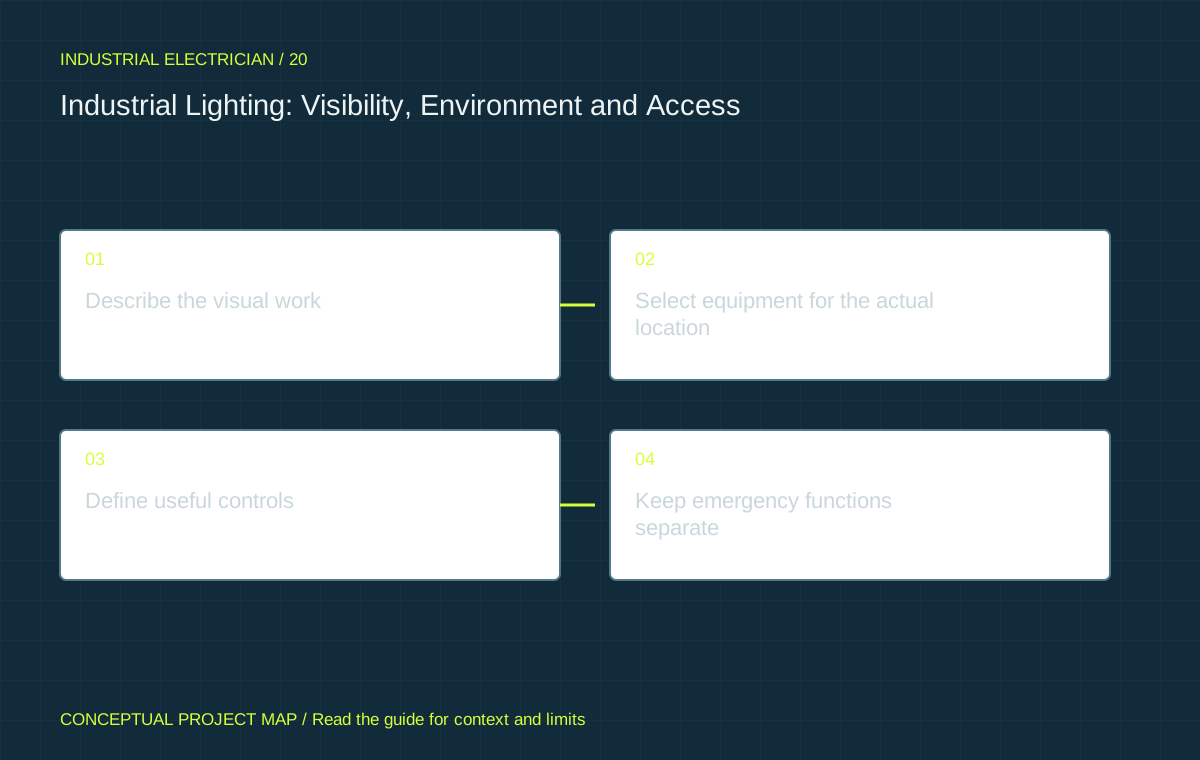
Describe the visual work
Identify workstations, inspection tasks, vehicle paths, storage and maintenance activity. Equipment, shelving and overhead services can obstruct light or create glare. A single average figure for the building may miss the task that governs the design.
The lighting specialist should define the applicable design criteria and perform the required assessment. This guide does not supply a universal illuminance target for every industrial operation.
Select equipment for the actual location
Dust, moisture, heat, vibration, washdown and classification can change the selection. Confirm the product’s suitability and approval rather than assuming that an industrial label covers every condition.
Where hazardous areas are involved, use the accepted classification and the hazardous-location review. Environmental enclosure requirements and explosive-atmosphere suitability are separate questions.
Define useful controls
Occupancy, scheduling and daylight controls can reduce unnecessary operation when suitable for the work. They must preserve visibility and avoid unexpected darkness in occupied or moving-equipment areas.
Explain the operator’s override, failure and maintenance modes. A controls upgrade should be accepted through representative use, not only a demonstration that the lights can dim.
Keep emergency functions separate
Normal lighting improvements do not automatically satisfy emergency or other life-safety requirements. Identify the applicable assessment, power arrangement and test obligations with the responsible professionals and authority.
During installation, maintain the required safe access and temporary arrangements. Lighting work above active production also needs coordination for lifting, falling objects and interruption of the area below.
Price the installed and maintainable system
Include access equipment, mounting, controls, disposal, electrical work and commissioning. Compare products by application suitability, support and service access as well as energy use.
Retain fixture identity, control configuration and maintenance requirements. Establish a baseline on the actual floor so later complaints can be compared with accepted conditions. The cost guide provides a wider scope checklist.
Questions / Direct answers
Common questions
Can fixture wattage determine industrial lighting quality?
No. Task visibility, distribution, obstructions, glare, environment and control behaviour need design and assessment.
Can occupancy controls be used anywhere in a plant?
Only where the arrangement suits the work and relevant safety requirements. The design must address occupied areas, moving equipment, overrides and failures.
Does a normal lighting retrofit include emergency lighting?
Not automatically. State the emergency-system scope and applicable review, installation and testing separately.
References / Jurisdiction matters
Sources & further reading
Confirm the actual location, permit authority and equipment instructions before relying on a requirement. A source from another jurisdiction is identified for context.
- Electrical codes and standards currently in forceAlberta Municipal Affairs · 2026-10-07
- OHS Act, regulation and codeGovernment of Alberta · 2026-10-07
- Electrical equipment approval identifiers and field evaluationAlberta Municipal Affairs; historical interpretation, confirm current applicability · 2026-10-07
Do not open equipment, handle refrigerants or work on energized systems. Permits, qualified trades and inspection requirements vary by location. This guide does not design an installation or certify existing equipment.